Swedish Uncharisma

Too much can be made of ‘charisma’. Britain’s greatest peacetime Prime Minister – Clement Attlee – had none at all. Jeremy Corbyn, of course, was reckoned to be pretty deficient in this regard. That may have contributed to his defeat. Those on the other hand who are credited with most of it have very often been disasters. Boris is only the latest example.

Here in Sweden we presently have a Prime Minister who would score pretty low in most charisma tests; but who amongst you in Britain (or the USA) wouldn’t prefer his solid, straightforward honesty over the empty rhetoric, lies and tricksiness that make Johnson and Trump so apparently attractive to the poor, repressed sods who vote for them? We’re doing OK over here, thanks, with the solid ex-welder Stefan Löfven in charge.

Unknown.jpeg

Posted in Uncategorized | Leave a comment

Hopelessness

Am I a coward for having fled from it all? Here in reactionary Sweden – reactionary in the sense of still clinging on to progressive ideas – almost all the news from Britain and the USA is alarming.

The demonstration the other day in London against coronavirus restrictions – by all accounts including a fair number of the ‘tinfoil hat’ brigade, and following a similar demo in Berlin, and shoot-outs, even, in America – makes one fear for the collective sanity of whole nations. Of course, even the largest demonstration isn’t necessarily representative, and there may be a good case to be made for letting the virus run wild amongst us oldies in the interests of ‘herd immunity’ (is that right?); but it can’t be altogether sane, can it, if David Icke, Jeremy Corbyn’s iffy brother and the American Evangelical lobby (‘Jesus will protect us’) are among the marchers. Then there’s all the overt racism springing up after we thought we had educated it out of people; the sheer madness of Brexit; and this latest scheme by Murdoch and others to set up a ‘Fox News’-type TV channel in Britain (https://www.theguardian.com/media/2020/aug/29/rivals-plan-fox-news-style-opinionated-tv-station-in-uk) to counter the ‘left-wing’ bias (!) of the BBC.

Having recently re-watched the latest BBC documentary series on Murdoch’s ‘rise, fall and rise again’, currently being shown on Swedish TV, I shudder at the implications of that. TV simply to entertain, with the easiest way of entertaining being to shock: that was the formula that drove the earliest capitalist profit-seeking tabloid newspaper barons in Britain around 1900 (John Field knows about that), to the whole nation’s detriment since. A tabloid TV channel in Britain would set the seal on that descent into the sort of media hell that brought Trump to the White House in 2016, and might even revive the justly derided Boris’s fortunes in No. 10. What chance for the Left, and for rationality, and even for the world (cue climate change), in that case?

Corbyn might have stopped it; or, rather, a Labour government with Corbyn’s policies but with a leader less easily demonised by the tabloid press. The alliance between rich tax-dodging media-owning capitalists, the ‘Israel Lobby’ (‘Israel’, not ‘Jewish’), and those clever computer nerds in Cambridge Analytica, acting on people’s fears and prejudices, turned out to be too much for us in 2019; and will be for the future, if we don’t find a better way of combatting them. It’s a huge task, involving radical political, economic, moral and social reform, which it’s hard to see coming soon. Even if this present incompetent government self-destructs, it’s difficult to see an acceptable alternative arising. A more charismatic leader might help; but in a society that bestows ‘charisma’ on clowns like Boris and Nigel Farage that’s not exactly promising. What we probably need is a revolution. But that isn’t Britain’s way, is it?

I feel guilty for hiding away from it all; but of course the news still reaches me across the North Sea, and strikes at me as much as it would back in Hull. I couldn’t do any more there than I can from here. I’m no good at organising, a poor public speaker, and too lame even to go pamphleting. My next two publications – a new edition of an old work, and a collection of past essays: really I’m living off my fat just now – both have chapters excoriating the present madness, but they won’t gather anything like the same readership as books on similar themes by snake-oil celebrities like Johnson and Rees-Mogg. I can’t write the sort of stuff that would get me into the tabloids, or on Fox TV-UK. If we did have a revolution – and if it were the right sort, not a ‘populist’ putsch – I’d fly over straight away and hobble to the barricades. But that won’t happen, will it?

Gosh I miss those few days of naïve hope last December! Hope is the worst thing to be taken from us. OK, my fault, I know.

Posted in Uncategorized | 4 Comments

Fake Patriotism

If we’re properly aware of the words – ‘Britannia rules the waves’, ‘wider still and wider’, and so on – it’s only to remind us how different things are now; how pathetic these sentiments sound in the 21stcentury, and even sounded at the time, if we know anything of our history; and how low Britain has fallen – or, by my way of looking at it, how far she has advanced – since the days of Thomas Arne and Edward Elgar. Almost no-one takes the words seriously, surely? They’re just fun to sing.

What certain people do seem to be taking seriously is the idea that certain po-faced Leftists are trying to ban them as ‘politically incorrect’, as part of a general campaign against ‘free speech’ which has decent ‘patriots’ afraid to go out at night. That’s the line that our right-wing tabloids are taking; with Prime Minister Boris Johnson – after a fortnight of saying nothing about anything really important – now latching on to it in order appeal to his more xenophobic voters (https://www.bbc.com/news/entertainment-arts-53902065). Johnson ties it in with a general lack of what he regards as ‘patriotism’ in the country, which he seems to think depends on our being uncritical about ‘our’ history in every regard. Personally, the low points in Britain’s history – which I’m a chronicler of, as well as of the good parts – are likely to make me feel prouder of my country, simply for the fact that we’ve come out of them. That is, if I could ever feel ‘proud’ of a history that was too long ago for me to have any responsibility for.

Incidentally, among the ‘good parts’ I would include the anti-imperialist discourse which was the subject of my first book; invented in Britain – that is, as a general theory – and immensely influential thereafter.

I do wish the young Lefties who object to imperialist songs and statues – however few of them there may be – would shut up. For a start, they’re usually grossly uneducated about the realities of British colonial history. And secondly, their effect is only to goad and encourage our proto-Fascist Right.

.118543246_2978212112399980_4419084036363252062_n.jpg

Posted in Uncategorized | 8 Comments

Something to Look Forward To

Porter flyer-2Porter flyer-2

Posted in Uncategorized | 4 Comments

Bye-Bye Labour

This I think is the final straw for me. It’s an email from the General Secretary of the Labour Party, David Evans, to Constituency branches, telling them what topics branches can and cannot discuss.

‘This will ensure that the business your local party is conducting is appropriate, minimises any challenge to its decisions and does not leave the party – locally and nationally – or its officers open to potential legal liabilities.’

A number of topics are covered in the email, some of them procedural; but the main ones refer to the recent debate on ‘anti-semitism’ in the party.  It’s the last that concerns me most. The IHRA ‘definition’ of antisemitism is, in the minds of most scholars, highly flawed, and by seeming to conflate antisemitism with criticism of Israeli governments has done untold and unmerited damage to the reputation of the Jewish community among many Labour members and supporters. Now however we are told that we aren’t allowed even to discuss it.

Here’s that last instruction.

IHRA definition of antisemitism

We are aware that some CLPs and branches have had motions tabled to “repudiate” the International Holocaust Remembrance Alliance (IHRA) definition of antisemitism. The IHRA definition of antisemitism and its examples was properly adopted by the Labour Party in September 2018. CLPs and branches have no powers to overturn this decision. Furthermore, such motions undermine the Labour Party’s ability to tackle racism. Any such motions are therefore not competent business for CLPs or branches.

As per the previous general secretary’s instruction, any discussion about ongoing disciplinary cases remains prohibited.

This was obviously done under pressure – real or imagined – from what might be called the ‘Israel lobby’ and its press supporters. But whatever the provocation, I’m afraid I can no longer remain a member of a party that curbs civilised free speech in this way. This blog has probably made me liable to expulsion in any case; but I’ll save the party the trouble.

Where I’m to go to now I can’t tell. I no longer have a political home in Britain. As a demi-Swede I may try Vänsterpartiet here: formerly the Communists, but now the closest to Corbyn’s and Attlee’s party I can find anywhere. Of course I’ll still vote Labour in England, and wish Keir Starmer well; but he can have my membership card (of 50 years) back.

Posted in Uncategorized | 9 Comments

To Boldly Go

Speaking of science fiction… My friend Ken recently put me on to a new author – new to me, that is – whose books I am avidly gobbling for my holiday reading just now. His name is Cixin Liu, and I can heartily recommend him to aficionados of ‘hard’ Sci-Fi. By that I mean Science Fiction with big ideas, embracing the whole cosmos, and alternative civilisations and human – or other – conditions that force us to think anew about our own. My great heroes in this kind of genre have always been HG Wells (The Time Machine), Ursula le Guin (The Dispossessed and The Left Hand of Darkness), and Olaf Stapledon (Starmaker and First and Last Man): writers whose minds soared above those of the rest of us, but from a basis of genuine scientific knowledge – chemistry for Wells, anthropology for le Guin, philosophy for Stapledon – which stopped them sinking into mere ‘Fantasy’. (Although le Guin is celebrated in that genre too.)

Cixin Liu is Chinese, which gives his writings an interesting dimension for Western readers; and his scientific ‘base’ is IT. You’d have thought that might make him slightly nerdish. But not at all; he too soars magnificently, and into so many different ‘alternative’ futures and situations as to make one wonder at his imagination. I started with his best-known work, The Three Body Problem, whose science I barely understood, but without that making much of a difference to my enjoyment of it.  Just now I’m reading The Wandering Earth: a collection of longish ‘short stories’. I’d recommend that as a starting point. After these, I have, happily, two more to read.

I hate it when people equate Science Fiction with Star Wars, Star Trek, and other popular examples of the genre which are really no more than Westerns with rocket ships. The best SF is cerebral. Even for a historian, engaged in the actual past, reading it can put that past into a context that no other genre of writing can.

I have to admit, however, that I initially acquired my love of SF at the age of 10 from the ‘Dan Dare’ strip in the Eagle. That was really based on World War II: with the Treens as Nazis and their evil leader, the Mekon, as Hitler with a big head. (Since then he’s reminded me of Dominic Cummings: https://bernardjporter.com/2019/09/11/separated-at-birth/.) There was nothing to really stretch the imagination there. But what more could you expect in 1951? And the great Frank Hampson’s artwork was superb.

Posted in Uncategorized | Leave a comment

An Algorithmic Dystopia

‘Algorithms’ have suddenly come to be the magic solution to all problems. I think I’ve been a little behind the curve in realising this. Wikipedia defines the algorithm as

a finite sequence of well-defined, computer-implementable instructions, typically to solve a class of problems or to perform a computation. Algorithms are always unambiguous, and are used as specifications for performing calculations, data processing, automated reasoning, and other tasks.

By feeding key words, key statistics and key facts into a computer programme they can – for example – tell Amazon what topics I am likely to be interested in, and so what books I might want to order from them next time around; advise political parties which way I lean opinion-wise – perhaps from my Amazon orders; and tell examining boards what grades I ‘would’ have got if I had been able sit my A-levels this year.

The firms and organisations that compile and crunch these algorithms, therefore, are likely to be immensely powerful. It’s possible that they delivered the EU referendum to the Brexiteers in 2016, the General Election to the Tories in 2019 (they certainly helped), and all those socially-discriminating A-level scores to poor sixth-formers this month. The method is known to have its dark side. The disgraced Cambridge Analytica worked with algorithms. Dominic Cummings appears to be deep into them – they’re what give him his reputation for almost superhuman political judgment, and his value, therefore, to our simple-minded but willing-to-be-led prime minister.

It’s possible that the current row over A-levels – with socio-economic ‘facts’ having been used to down-grade students in ‘lower’ areas of the country while maintaining high grades for Public (in the British sense) schools – will undermine confidence in the whole method. At least one Oxford college has stated that it will honour its offers to applicants made on grounds of their previous school work and teachers’ references, even if their analyticised grades seem to make them less worthy. Good for Worcester College! Expect there to be more disillusionment with the system when GCSE results come out.

As a devotee of utopian and dystopian science fiction, it seems to me that a society run by algorithms fits squarely into the latter category. In its search for objectivity and certainty among complexity and confusion, it takes little account of human judgment. Society is a machine; either robotically controlled, or controlled (in the case of politics) by a group of clever people manipulating it for their own ends. In either case its implications must be profoundly undemocratic; even if those of us on the Left could learn how to pull its levers and press its buttons too. The best we can do is warn.

Posted in Uncategorized | 3 Comments

Role Reversal

If a nation’s identity is formed by its history, at least in part, then Britain at present appears to be forming a new identity in contravention of hers. I can scarcely believe what I see happening over the water in my country of birth these days: Tories wetting themselves over an ‘invasion’ of poor refugees in rubber boats on the Kent coast – or is that only Farage? please dear God let it be so – and a Government coming very close to a kind of Fascism in what it plans and what it has already done. Of course all these trends have precedents in earlier periods of British history, but they were never dominant, and never part of the ‘progressive’ narrative which I always liked to believe defined us more.

My new book of essays, Britain Before Brexit, due out I think early next year, bears on this; with its main theme – if there is one, in a very disparate collection – being the way that Britain’s and the European Union’s identities have changed, and indeed very largely reversed, over the past fifty years. From being the most generous European country to refugees and immigrants in the 19th century, we have become the meanest; from the most open we have become the most surveilled; from the most democratic, one of the least so; from a country where ‘a gentleman’s word is his bond’, a sink of public deceit and corruption; and from the country with the free-est press in Europe, to one now ranked near the bottom of the scale. History no longer counts for anything in our view of ourselves.

By ‘we’ of course I’m referring to my British half. We Swedes are just as appalled.

Posted in Uncategorized | 3 Comments

Sweden and the Plague

Living in Sweden as I do currently, I feel I should have some view of Sweden’s very different approach to Coronavirus from nearly any other country in the world. So here goes.

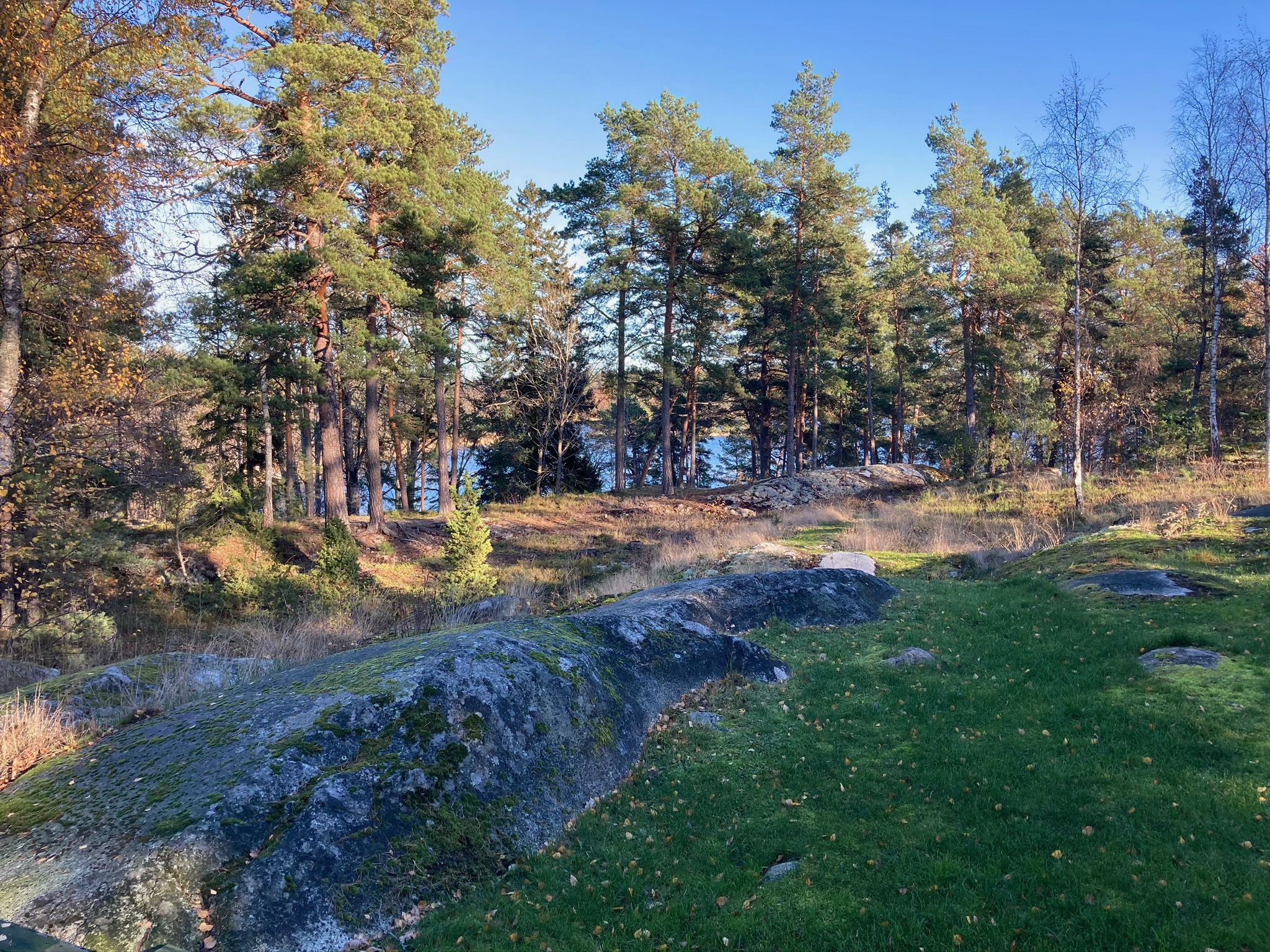
In fact life here seems to be going on very much as normal, although being out on an island as we are I can’t be sure what it’s like in the city. The local krog  (pub/restaurant) is doing a roaring trade, with customers – mainly arriving in boats – eating and drinking happily together; our lanthandel (general store) is trying to enforce social distancing, but without much visible success; and I’ve seen literally no-one wearing a mask. (So much for all those masks I brought with me from England.) Schools, pubs and cafes are apparently still open in Stockholm, albeit with restrictions. There’s no general ‘lockdown’ here, which means that the economy is functioning far better than elsewhere, except where it depends on other countries supplying materials or visitors. We’re receiving our own visitors from Stockholm on our island, without any fear of infection – we think – either way.

But then that’s not typical of the whole of Sweden, whose death-rate from Coronavirus is many times higher than its Nordic neighbours’, for example, and whose government has deliberately set its face against the sorts of restrictions that almost every other country in the world has felt are necessary in order to save lives. Sweden has always been known for its distinctive ‘model’ of society; but this  model doesn’t seem quite right for a modern ‘welfare’ state. It’s also highly controversial in Sweden itself, as well as – of course – abroad. A few weeks ago Sweden was being roundly mocked for it almost everywhere, except perhaps in Trump’s ‘freedom’-loving USA.

But Anders Tegnell, Sweden’s chief epidemiologist, who is responsible for the policy, still insists that in the long run he will be proved right, with fewer fatalities in Sweden from a second ‘spike’ of Covid-19 than other countries will suffer – fewer total deaths, therefore –  and less harm having been done to the Swedish economy along the way. Apparently it all has to do with ‘herd’ (or what they call in Sweden ‘flock’) immunity. I understand that this was one of Dominic Cummings’s pet ideas, too.

An immense amount has been written about this contrast in approaches to the disease. One of the latest and best analyses is to be found in August 9th’s Sunday Telegraph, by Ross Clark (unfortunately behind a paywall). What I can gather from that is that no-one will know for certain whether Sweden or the rest of the world is right until it’s all over – if it ever is. Obviously I can have no informed view of my own. As a demi-Swede I should like my adopted country to be vindicated; but would be mortified if that meant vindicating the hated Cummings – and even Trump – too.

Posted in Uncategorized | 2 Comments

Me and ‘The Jews’

My attitude towards Jews and Israel has been consistent for 70 years. (Before that, I can’t remember.) First of all, I had no attitude towards Jews at all; certainly not ‘the’ Jews – with the definite article. In my little childhood world they didn’t feature as something separate from the rest of us. Apparently I knew one or two – one was a wartime refugee taken in by my family – but not that they were  Jewish, which in any case would have meant nothing to me. At my secondary school they distinguished themselves by not attending school chapel, but that was true of my Roman Catholic friends also. Otherwise Jews appeared to be fully integrated into our society, so that normally one wouldn’t notice them. It’s the reason why I can never be sure, when asked, how many Jewish ‘friends’ I have had. Even if I had been more aware, my own religion (Methodism) preached tolerance toward all systems of belief; as did the democratic socialism I first discovered in my late teens. I’m sure I wasn’t alone in any of this.

For us ‘the Jews’ (with the definite article) mainly featured somewhat distantly, as victims of Hitler and the Holocaust, which of course engendered enormous sympathy towards them.  In British history they occasionally appeared as scapegoats for racist right-wing movements, mainly in the East End of London, where they had been settled in some numbers since the 1890s; and as prominent men and women in British politics: Disraeli first of all, then a whole raft of leading socialists, including the Millibands’ father. Their depiction in literature – Shylock, Fagin – never influenced my own view of Jews as a people, any more than Lady Macbeth soured my attitude to women. Later I grew to admire Jewish contributions to many forms of ‘culture’; and to like most – probably all – of the self-proclaimed Jews I met as an adult. Some of them were in the Labour Party, which seemed to me to be an ideal home for those brought up in what I understood then to be the basic Jewish ethic.

On the subject of Israel, however, my view is rather more nuanced. When I was younger I knew little about the country, apart from the impression I had that it was run on idealistic socialist lines: the kibbutzim, open-necked shirts, and so on. That, I think, was its special appeal to many in the Labour Party in the 1940s and ’50s. We also of course strongly sympathised with the Jews’ wish to escape from the European anti-semitism that had tyrannised so many of them from mediaeval times onwards, culminating in the Russian pogroms and the Nazi Holocaust, to which the formation of a new nation in what was then the territory of Palestine seemed a likely answer, if not the perfect one.

Its initial imperfection derived from the fact that Israel was created on land stolen from others – either the Ottomans, or the Palestinian Arabs – with help from an imperial power – Britain – in pursuit of its own ambitions in the Middle East. That fitted Israel into another narrative: that of ‘European colonialism’, which Labourites like me weren’t quite so keen on – what after all was the essential difference between the Jewish colonisation of Palestine and the white settlement of much of southern Africa? The Zionists had an answer to that, of course, which was that Palestine had been promised to them by God, no less, back in Old Testament times; but that was unlikely to impress anyone who didn’t believe in the literal truth of the Bible. That of course included me.

Nonetheless, I felt that the state of Israel should be accepted now as a fait accompli, just as the modern white-dominated United States is; so long as its origin in colonial robbery and conquest is acknowledged by its present-day citizens, with due contrition. (There’s some of that – though not enough, perhaps – in present-day America and Australasia.) One of the implications of this necessary sense of national guilt would be the fair treatment of the Palestinians, both within and outside the established borders of Israel; which over the last few decades has not been much in evidence. Hence the criticism that has been voiced of many of Israel’s policies – not of Israel’s existence as a state, and even less of ‘the Jews’ – by many people, including the anti-imperialist Labour Left, but also by very many Jews themselves, who see the expansion of Jewish settlements, for example, and the treatment of the Gaza enclave, as affronts to what they regard as their religious principles. It’s widely believed that it’s this that lies at the root of the charges of ‘anti-semitism’ that have been laid against Jeremy Corbyn’s Labour Party; a confusion – deliberate or otherwise – between that vile opinion, and criticism of the policies of the present right-wing Israeli government, which should of course be legitimate – and would be of almost any other nation.

I share much of that criticism, as a strong anti-anti-semite; which is why it was so personally distressing for me to be told – by some Jews, no less – that I had in fact been associating for many years with an ‘anti-semitic’ political party. It was this that provoked my first blog post on this subject, strongly disputing this. (See https://bernardjporter.com/2016/04/28/anti-semitism-and-labour/.) Basically what that post argued was that the Labour Party, while undoubtedly containing some anti-semites within it (as any large organisation of people is likely to), was broadly innocent of anti-semitism as a party, and that the propaganda against it on the grounds of its alleged Judaeophobia was therefore, at the very least, overblown and unnecessary. At about the same time as this post was published, a very fine MP, Chris Williamson, was expelled from the Labour Party, under pressure from the British (Jewish) Board of Deputies (which has performed a disreputable role in this whole saga) for saying much the same thing.

It was in the light of this that, in common with a number of similarly unhappy Labour members, I submitted my own name to the ‘Governance and Legal Unit’ of the Labour Party for potential expulsion on ‘anti-semitic’ grounds. I was not expecting an answer – I merely thought I was being provocative – but to my surprise one came through the other week. They had thoroughly read through my blog posts, and objected to a number of my statements. The main ones were (a) my placing of the term ‘anti-semitism’ – in reference to the Party  – in inverted commas, which they regarded as ‘dismissive’ (which in this context it was intended to be); (b) my defence, as a historian, of Ken Livingstone’s claim that Hitler at one time had looked favourably on Zionism as a means of getting rid of Germany’s Jews: any mention of Hitler I was told is implicitly anti-semitic; (c) my statement that I wouldn’t let my view of this whole affair affect my attitude towards Jews generally, which was criticised on the grounds that it left open the possibility that I could have let it affect my view of Jews generally; and (d) that a quote I used from a novel by Christopher Isherwood – ‘A minority has its own kind of aggression. It absolutely dares the majority to attack it’ – could feed into a common anti-semitic trope, that the Jews were responsible for their own oppression.’ Well, perhaps; although of course it wasn’t intended to suggest that.

Still, the Unit decided not to expel me, but instead advised me to read ‘A Reminder of Values’, which they enclosed. I’m still not happy, and may later resign from a Party that seems so cowed by the criticism coming from the ‘Israeli Lobby’; which may have played a crucial part in preventing it from coming to power in 2019, and so turning my country away from the doleful future that seems to await it now. I still maintain that I am not in any way anti-semitic; but I wouldn’t be surprised if the Labour Party became less innocent in this regard than it has been, in view of the way the charge of anti-semitism has been falsely weaponised against it.

Posted in Uncategorized | 4 Comments