Checkmate

And here we go. (Morning of the 24th.) Is this the consummate chess master’s deep game? It would explain Trump and Brexit too, of course.

https://eand.co/putins-game-12307a927117

Posted in Uncategorized | 2 Comments

The Russian Bear

During the last century Russia’s flaws and threats were invariably put down to her Communism, and consequently used as a potent argument against that political ideology. Historians however were aware that authoritarianism and imperialism had long been a feature of the Tsarist régimes that preceded the Soviet one, and consequently could be regarded as an inheritance from that era rather than as something essentially ‘socialist’. This should have warned those who had hoped, and even predicted, that the death of Communism in Russia would give way to a new age of political and social Liberalism there, that the transition might not be as smooth and simple as that.

Autocracy can wear many clothes. Putin’s sort can be traced back to the 19th century, if not earlier; when the threat from the ‘Russian Bear’ was believed to be the major one facing Britain (and British India), manifested in countless cartoon images. (Google ‘Images – Russian Bear’.) Russophobia was widespread in Britain then – books have been written about it – and not always as misdirected as such phobias often are. ‘Just because I’m paranoid’ – about the Russians – ‘doesn’t mean I’m wrong.’

Posted in Uncategorized | 4 Comments

Political Education

There are three ways I can think of to repair Britain’s crippled democracy. One is a fairer electoral system than our present ‘FPTP’ one. (Here’s one way of doing it while still retaining local accountability: https://bernardjporter.com/2016/02/29/first-past-the-post/.) The second way is the introduction of a truly ‘free’ press: i.e. one that is not only ‘free’ in a commercial sense, or ‘free’ to anyone who can buy it up.

The third way is the introduction of proper political education in schools. That would involve teaching pupils about the fundamentals of the British constitution, such as it is; how to recognise ‘propaganda’, especially of the ‘fake’ sort; fact-checking against sources; questioning; and – most important of all – how to think rationally, in a joined-up way, and with a regard for the contexts of ideas and events, of which the ‘historical’ context could be one. I understand that some schools have been trying to do much if not most of this. My heart goes out to them, in these dangerously divisive times. (They may, incidentally, find my forthcoming book helpful.)

One of those schools appears to be the one in Nottingham whose pupils, as part of their Politics course, recently wrote a letter to the Education Secretary highly critical of the impact of government policies on them; and also, more generally, of Boris Johnson’s ‘hypocrisy’ (https://www.dailymail.co.uk/news/article-10494787/Nadhim-Zahawi-slams-Nottingham-school-told-pupils-criticise-Boris-Johnson-Partygate.html.) That of course angered Conservatives no end, and seemed to confirm their age-old prejudice against any kind of ‘political education’ in the hands of teachers, whom they have long suspected to be, as a genus, ‘left-wing’.

This goes way back. I remember that in my schooldays – I’m talking of the 1950s here – we weren’t allowed to be taught any History post-1914 (or even earlier), on the grounds that it could so easily be twisted by evil Marxist pedagogues into political indoctrination. ‘Working-class’ history was discouraged too. The equivalent issues today, similarly mistrusted by the Right, appear to be ‘Black’, Women’s, Colonial and ‘Queer’ histories: all of them threatening to poison the public discourse with what is termed ‘wokery’. (Whose excesses, incidentally, also often anger me.)

Today’s Tories dislike these disciplines and approaches mainly because of the threats they pose to their own dominant world view. It was the ‘Left-wing’ slant of those Nottingham school-kids’ letter that they objected to. If Politics is to be taught in schools, say the critics, it should be ‘balanced’: on the one hand Johnson the liar and hypocrite; on the other hand brave Sir Boris, killing the dragon ‘Covid’. Both sides should be presented equally. (Rather as they are supposed to be on the BBC. ‘On the other side of the argument we have the Flat Earther, Mr…’)

I don’t suppose it has occurred to these Tory critics that, if teachers do tend to be Left-wing, it could be because they are more highly educated – even ‘brighter’ – than other people; and consequently more likely – often, if not always – to be right? – Of course this is an ‘élitist’ view, and so dangerous to voice publicly. But élitists have a right to be heard too.

Posted in Uncategorized | 2 Comments

Ukraine: Boris’s Falklands?

What a gift for Boris this Ukraine business is! It gives him the ideal opportunity to look strong and resolute, climb into fighter jets for photo ops, talk with (or, rather, at) powerful autocrats, issue dire warnings, look Churchillian, speechify and sloganize, harness history to his purposes (‘Munich’), send in soldiers… and push all that trivial ‘partygate’ stuff aside. (‘I’m focussed on the real issues’.) And all without doing anything at all to help the situation; indeed, if anything rather the reverse, if it makes it more difficult for Putin to behave as reasonably as he’s insisting he’s already doing. If he (Putin) draws back his troops, Johnson will claim it as a victory for his Churchillian stand. If he invades regardless, it will still be said to have justified that stand. For Boris it’s a win-win situation. Not, of course, for the Ukrainians; for whom one suspects it can only be lose-lose.

Of course I have no reliable opinion on what is in Putin’s mind, let alone BJ’s; and no more knowledge of things on the ground than I read in the generally ignorant, and deeply partisan, British press. (Sweden’s is more reliable.) Putin’s case against the Ukraine’s shifting towards NATO and the EU looks fairly reasonable (or let’s say ‘rational’), in geo-strategic terms. But then I have no way of knowing how likely that scenario is. There’s a case to be made for Europe’s having ‘imperial’ ambitions that threaten Russia’s border-states. That’s what our British Brexiters claimed, after all, with respect to the EU’s ‘imperialist’ relations with the UK. This seems to lie at the root of Putin’s paranoia; if indeed that is what it is. On the other side, a case can be made for Russia’s wanting to revive the Russian Empire/USSR, especially in the Baltic States, which are – as it happens – very close to us. That may be why Kajsa tells me she’s recently spotted Swedish warships in the Stockholm Archipelago. The Russian-speaking population in the east of Ukraine also obviously poses a problem, just as the Germans in the Sudetenland did in 1938. That needs to be sorted, one way or another; but in any case diplomatically.

I have to say I find it difficult to get inside the minds of those who think in these rather simplistic geo-political terms, despite my having studied ‘great power rivalries’ and ‘empires’ all these years. (There are gradations of ‘sovereignty’, and of ‘subjection’.) Nonetheless they seem genuine on the part of many national leaders, especially the more authoritarian ones. Whether they will cause Putin to launch a ‘Sudetenland’ on the Ukraine, and then advance to confront the Swedish navy in the Baltic, I can’t possibly tell. But then neither can Boris, nor Biden, nor all those others who are predicting – or at least uttering dire warnings of – ‘the biggest war since 1945’ (that’s Johnson yesterday), in order to make our toes curl.

Let’s hope toe-curling is the end of it. And – more trivially – that the Ukraine doesn’t give the same boost to Johnson that the Falklands gave to Thatcher. He doesn’t deserve it.

Posted in Uncategorized | 10 Comments

Brahms

What is it with me and Brahms? I first came to him via those French Nouvelle Vague films of the 1950s and early ’60s, nearly all of which had Brahms playing in the background. One, I seem to remember, was even called Aimez vous Brahms. Well, I did aime him; or thought I did; especially the first string sextet, which seemed to give expression to my adolescent feelings at the time. (I was going out with a French girl. Ah, Martine!!) I dutifully went through all his other stuff: symphonies, piano concertos, chamber music, songs, the Deutsches Requiem. I’ve remained faithful to that sextet, the first piano concerto (the gutsy one), the Requiem, and the Alto Rhapsody. But all the rest now leave me deeply unsatisfied. Is it because the ones I’ve listed are – I think – relatively early works, written while he still had some spunk?

Yesterday we attended a performance of his violin concerto in the Stockholm Konserthus – I believe the first ‘offline’ concert they’ve had there since lockdown. The hall – an architectural gem, by the way – was packed. It was great to be rubbing shoulders again – literally; the seats are quite narrow – with other people. But the concerto still disappointed. It was well played, by a Danish violinist, Nikolaj Szeps-Znaider, and Kungliga Filharmonikerna under the baton of the excellent Alan Gilbert. But I feel that, like most of Brahms’s music, it doesn’t say anything.

Am I missing something? Probably; I ‘missed’ the ‘something’ in Wagner, for example, for many years before I succumbed. Myself, I’m a Berlioz man when it comes to mid- and late-19th century romantic composers. Just now I’m soaking myself in Bruckner. (I’d like to die to one of his adagios.) Maybe that’s why I currently find Brahms so facile. I’m reminded of a judgement I read once, in a novel I’ve forgotten the name of. ‘Brahms wasn’t a great composer. He just sounds like one.’ Clever. (I wish I could remember who wrote it.) Do other classical music lovers feel the same about him?

If I get Covid through being in a crowded concert hall listening to his music, I’ll know whom to blame.

Posted in Uncategorized | 3 Comments

The Death of Hope

I’ve just turned 81. That’s well past my sell-by date, I reckon, and indeed a bit of a bonus in view of the various afflictions that have hit me over the years: nothing really serious, but two or three of which would have almost certainly killed me in the days before modern medicine. (But isn’t that true of most of us?) Obviously, in the immortal words of Frank Sinatra (My Way), ‘the end is nigh’ for me now. I’m not afraid of it – it must be quite restful to have melted into nothingness – but only of the process, in case it turns out to be painful and friendless. Or is that too personal, and too heavy for this blog? I’m sorry if so. I won’t dwell on it.

But in any case it’s not my own situation that is getting me down nowadays, or even my ‘regrets’, of which I’ve had more than ‘a few’ (Sinatra again); but the situation of the world, and of the country of my birth in particular. It’s not only Boris and his cast of monsters (see my last blog) who get me down; but the whole tenor of British – and several other countries’ – politics at the present time. You’ll know what I mean: lies, corruption, foreign interference, one-rule-for-them, the necessity for food banks, propaganda, cynicism, greed, imperialism (still), ‘dead cats’, privilege, ‘populism’, ‘partygate’, ‘wokeism’ (distracting people from greater problems), fake ‘anti-semitism’, a corrupt press, war-scares, ‘celebrity’, Prince Andrew, anti-vaxxers, climate-change denial, and – in my admittedly biased view – the late-stage capitalist crisis that may lie at the root of most of these things. (I could go on. But it’s already getting boring. Indeed, isn’t that one of the dangers: that the government’s problems and misdeeds, endlessly recounted, get so boring as to make people want to push them away?) That said, however, I’ve never known such a depressing period, politically, in all my (too) long lifetime; and in particular cannot remember a time when there seemed to be so little hope, of anything better coming from it, on any front.

Of course little of this affects me personally, born as I was into a uniquely lucky generation (in Britain). But it may weigh heavily on my children and grandchildren and their generations; who won’t be able even to conceive that a welfare state like Labour and the Liberals gave us in the 1940s, free health treatment and university education, growing equality, together with a pretty flourishing industrial base, and a pretty civilised and honourable political discourse, are even possible. (And that’s without taking the international situation on board.)

Above all – way above all – they won’t be able to feel the hope that most people, even the most oppressed of us then (women, gays, blacks), cherished in the post-war years, right up to Thatcher: the ‘Whiggish’ faith, that is, that however bad things might be right now, they will get better. Who can possibly think that today? Corbyn seemed to be promising it in 2019, and politically re-energised millions of younger Britons as a result. But his defeat also marked the destruction of ‘hope’. Now the only hope being promised – apart from Boris’s and Jacob’s wet dreams of a post-Brexit free market heaven – is of mending some of the damage the Tories have done over the past thirteen years. Nothing more.

You may think I’m romanticising the post-war years in Britain. Maybe. Here’s a piece I wrote about the 1950s for the TLS a few years ago. (I may have posted it before.) That, too, emphasised the ‘hope’ that I see as the main casualty of modern times: https://www.the-tls.co.uk/articles/swinging-fifties/. But I’m sounding like a nostalgic old fart now. Or the depressive I certainly am.

PS. Here’s another version of my ‘1950s’ piece, from this blog: https://bernardjporter.com/2016/02/28/1956/.

Posted in Uncategorized | 3 Comments

Country of the Damned

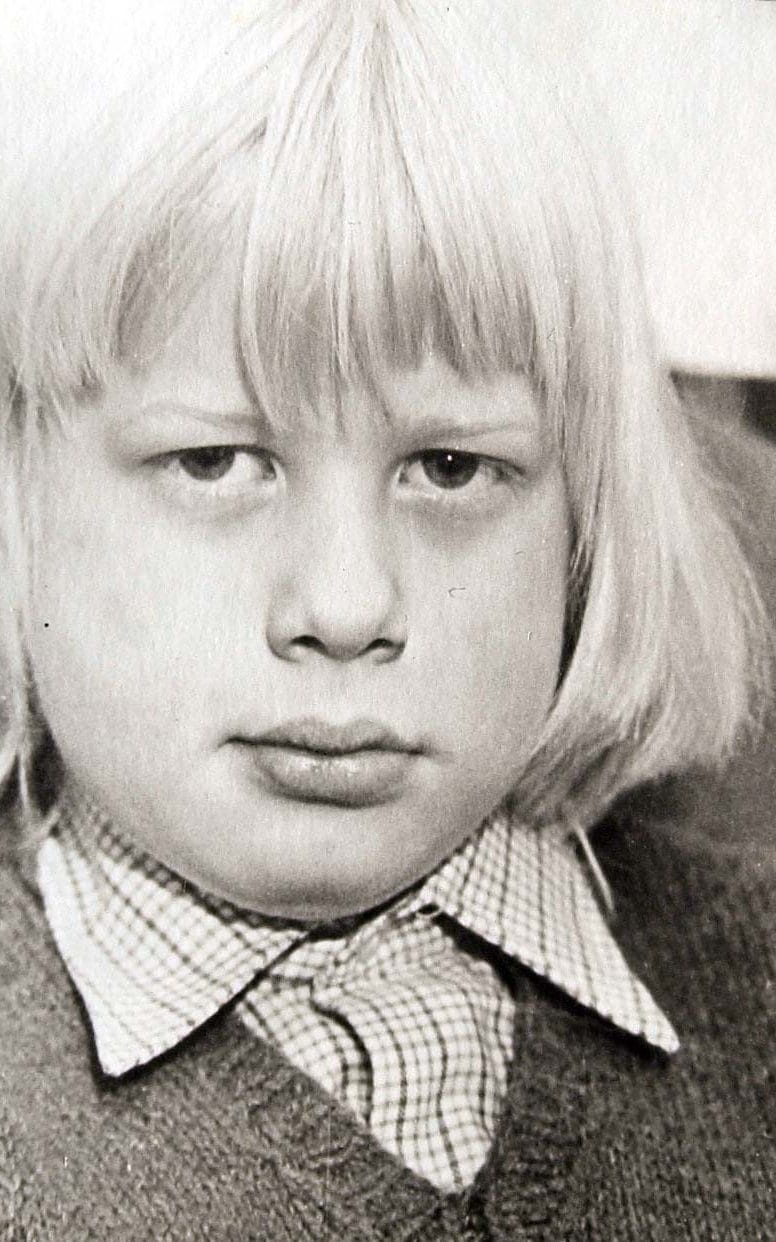
If you saw these pics on a poster outside a cinema, you’d know what sort of movie you were in for, wouldn’t you?

PS (for those who may not have recognised them, like the Facebook editor who declined the post because, I think, he assumed the boy pic was a reference to paedophilia):

The Count Dracula figure on the top left is in fact Jacob Rees-Mogg, our new Minister for pointing out the benefits of Brexit (if he can find any); the Rosa Kleb-like figure by his side is (or was) his old nanny, whom he used to take out canvassing with him (is that a coffin behind her?); and the boy at the bottom is Boris Johnson as a child: in whose dead, alien, Midwich-cuckoo eyes I think we can already see the self-regarding and entitled amoralism he has become notorious for as an adult. A Pantheon of horror-movie characters; as British readers of course won’t have needed to be told. This PS is just for you furriners.

Posted in Uncategorized | 3 Comments

Letting the Bastards Grind You Down

The depth of the present British government’s descent into lies, treachery, corruption, ignorance, clownishness, rank amorality and total discredit is difficult for us innocent children of the sunny (if only in black-and-white) post-war years to fully grasp. In the 1950s and ’60s this kind of record would certainly have spelled any government’s swift and ignominious end.

But of course most people alive today don’t know about the 1950s and ’60s, or only have a distorted view of them planted in their minds by Tory propagandists: rationing, strikes, three-day weeks, power cuts, fogs, fish and chips wrapped in poisonous newsprint, Derek Hatton, bodies unburied, Cantabrigian traitors, their black-and-white tellies – and the very occasional high profile political scandal which did force ministers to resign. All true, of course, but by no means the whole picture. And it wipes out all memory of the generally honourable conduct of British politics then, certainly on the domestic front (not so much in the Empire and Ireland), and of our politicians, even Conservative ones – a number of whom I actually got to meet in my younger days. You couldn’t say of these, with any degree of credibility: ‘oh, they’re all the same’, ‘all out for themselves’, ‘each as corrupt as the next one’, and ‘always have been’; which are the kinds of excuses being trotted out these days for the state of politics under Boris and his gang.

And it’s these excuses, of course, that are destroying present-day British politics, and possibly the country, even more surely than the corruption itself. What’s the point of ousting the monster when there’s no-one better to take his place – certainly not in the governing party – and not even on the Opposition benches, once the Right-wing press has dug its teeth into them. ‘They’re all the same’. So why get too upset about the present bunch of bastards? And why bother voting? ‘Politics has always been like this.’ It can’t change. Sit back in front of the telly and watch Nadine Dorries – our Minister for Culture, no less! – eating an emu-anus on ‘I’m a Celebrity’. That’s all politics is good for these days, and probably ever was.

Except, that is, for the Right; who have hooked on to the brilliant idea that disparaging democracy is a good way of manipulating it for their own ends. In this they’ve been hugely helped by all kinds of flaws in the British electoral system, poor political education, high-level conspiracy (even Russian), and the sorts of ‘freedom’ the press is allowed to have. ‘Take the voters for fools, and they’ll give you what you want.’ It’s tempting for Leftists to infer from this that most people – those who voted for Brexit, for example – are stupid. That thought, of course, is even more dangerous for democracy.

But how on earth do we counter it, without huge – even revolutionary – changes to our education, our media, and the way we choose our MPs? Since the flame of hope that Jeremy Corbyn briefly lit in this poor naïf’s soul (mine) flickered and died, I’ve been unable to see a way. Illegitimi non carborundum, they say; but the bastards seem to be doing a pretty good job of that now. I’m not the only one being ground down. But just remember: it wasn’t always thus. Times were bad in other ways, perhaps; but not with this degree of sheer political corruption’s being accepted as normal. We used to be better than this. Can’t we be again?

Posted in Uncategorized | 2 Comments

Starmer, Savile, and Truth

Do they really believe it? That Starmer was responsible for getting Jimmy Savile off? I wouldn’t be surprised if some of their voters do. After all, in America they fell for a similar slur about Hilary Clinton – running a Satanic paedophile ring from a Pizza restaurant in Washington DC; and the appalling ‘anti-Semitic’ smear against Corbyn is still believed here in Britain, if some of the people I’ve spoken to are any guide. ‘I was going to vote Labour, but then I read about the anti-Semitism, so I changed my mind.’ That was my Hull taxi driver on the way to the airport, for my flight back to Sweden in October. I don’t think I’ll ever forgive the British Board of Deputies, for perpetuating that scurrilous lie. And I’d always been favourably disposed towards the Jews as – on the whole – an ethical people. It could even have turned me into an anti-Semite. But of course it won’t.

Starmer seems to have laid that one to rest, by expelling all his party members, including Jewish ones, who criticise the current policies of the government of Israel: which criticism obviously needn’t be – and usually isn’t – a sign of anti-Semitism at all. That I consider to have been craven; although it may – only may – be necessary at this unhappy time in British politics, when it’s gestures that count. But it obviously forced the Conservatives to dig around for a new atrocity to pin on Starmer; which they then found in associating him with paedophilia, which is even more atrocious than anti-Semitism in most people’s eyes. Earlier Labour leaders also had to face slurs, although not quite of this degree of awfulness. With Ramsay MacDonald and Harold Wilson it was good old-fashioned treachery, a charge that was made against Corbyn too; but Wilson’s time was before the age of Social Media, and the ‘Dark Web’ (is that right?), which now allow the poison to spread far more widely and swiftly than even the Daily Mail was able to achieve in the days of the ‘Zinoviev affair’.

As to its effectiveness: who knows? Many of the elections and referenda these strategies were targeted at turned out to be pretty close-run things, which means that just a small minority believing the lies – my taxi-driver, for example – could have swung them. The Conservatives’ super-clever strategists – Dominic Cummings, Lynton Crosby – are (or were) being paid mountains of money to manipulate the electorate by focussing its attention on these sorts of thing. (Or, as mentioned earlier, on ‘dead cats’: https://bernardjporter.com/2020/03/10/the-dead-cat/.) They wouldn’t have bothered, surely, if they didn’t think their tricks would be effective.

The question remains, however: do they and their political paymasters really believe their own lies? Do Boris Johnson and his loyal lieutenants genuinely think – without a scintilla of evidence – that it was Starmer who covered up for Savile? Or that the life-long anti-racist Corbyn is an anti-Semite too? Where do they stand on the great slanders of the past: Zinoviev, for example, and Harold Wilson as a Soviet ‘sleeper’? (That is, if they’re even aware of this old history.) And if they don’t genuinely believe these lies, what are they doing parroting them? Is this all part of a new post-truth politics, where statements are only valued for their effects? Is this (to return to one of my favourite hobby-horses) what they now teach them at Eton? Any lie that will win will do. Machiavelli, thou shouldst be living at this hour. And Goebbels too.

And isn’t it significant that this sort of amorality is found mainly – I was going to write ‘only’, but that can’t be true – on the political Right?

Posted in Uncategorized | 1 Comment

Patriotism

This is an early sketch of a piece I hope to place in the press just before my new book comes out.

‘If people are not proud to be British, or of our flag or Queen, they do not have to live in the United Kingdom. Perhaps they should move to another country they prefer’. That was Lia Nici, Tory MP for Great Grimsby. (Grimsby was one of the ‘red wall’ seats that turned from Labour to Conservative in 2019.)

This is obvious nonsense. I write, incidentally, as someone who has actually taken Ms Nici’s advice and moved to a country I currently prefer. But other considerations came into that decision too, more personal ones; and the word ‘currently’ is important here. I’ve fallen out of love with what Britain has become, partly because of people like Lia Nici. I still feel loyal to what I thought, maybe naively, Britain used to represent. That hasn’t changed; the country has. (Or so I think; and my new European neighbours too. We’re no longer admired abroad as we used to be.) Does Nici feel I ought to remain ‘proud’ of Britain regardless?

And because of our ‘flag and Queen’? Which are, I agree, valid historical symbols of ‘Britishness’, but among others (roast beef and cricket?), and with what exactly they represented having changed quite crucially over the years. As has the idea of British ‘patriotism’. In the 18th and early 19th centuries, for example, it was those who wanted to change Britain who classed themselves as ‘patriots’, and whose patriotism was famously excoriated by Dr Johnson as a result – ‘the last refuge of the scoundrel’. After the last World War it was those self-same patriots who voted to make Britain a better place than she had been before it. For patriots can want to build New Jerusalems, as well as to return to old ones. Especially where those past Jerusalems are so thoroughly misunderstood as they are by many Brexiters – and others; perhaps the majority of people – today.

And yet still those Brexiters persist in harnessing Britain’s ‘history’ to their cause. Jacob Rees-Mogg recently published a – quite awful – history of Victorian Britain, lauding the achievements of the ‘Titans’ of that time, as models for the present day. Boris Johnson similarly looks ‘back’ to various British ‘golden ages’ for inspiration; and to the Empire and Winston Churchill in particular. Margaret Thatcher lauded the ‘Victorian values’ that had once made Britain ‘great’, before the Socialists had got their envious hands on them. Much of the appeal of Brexit lay in its promise to ‘take back’ the control that Britain had used to have as a ‘sovereign’ nation, before she surrendered it all to Brussels. So a view of ‘history’ appears to be integral to the Brexit case. Perhaps one shouldn’t be surprised at this, at a time when many Britons feel they have descended so low.

There are so many problems with this approach, however, as to have provoked me, at the beginning of last year, into writing a whole book to try to put it right. One of the problems is that the ‘history’ that many of these ‘patriots’ appeal to is simply wrong. No, ‘we’ didn’t use to ‘rule half the world’, as populist mobs have been heard yelling today. (‘Half’ is an exaggeration, for a start. But there are difficulties with the idea of ‘ruling’, too.) No, Britain’s power and influence in the past weren’t to the credit (or the debit) of Rees-Mogg’s ‘Titans’, whose ‘spunk’ simply needs to be recovered in order to restore our ‘greatness’ again. No, ‘we’ – the British – didn’t win the two World Wars on our own. No, the Empire wasn’t an unalloyed force for good in the wider world; but nor also was it a tyranny comparable with Nazi Germany; and it wasn’t always ‘racist’ by most definitions of that word. Britain’s South African ‘concentration camps’ were entirely different from Hitler’s. (Of course. We shouldn’t be misled by words.) Winston Churchill was neither the saviour of his country in World War II, although his oratory helped hugely here; nor a Fascist. Apart from Churchill, it was the Conservatives of the time who were the ‘appeasers’, not Labour; and the working classes who were the staunchest supporters of the war effort. You wouldn’t think that to hear some of today’s Tories.

Apart from these factual errors, and others, present-day popular views of Britain’s past – not only on the Right – often err by not giving enough consideration to context. Context is the essential contribution the historian can make to our understanding of the past, more important even than verifying the ‘facts’. Which is why my forthcoming book needs to be a little bit fatter than it would have been if correcting mistakes were the only point of it. (It’s still quite short.)

Beyond all this, however, there lies the question of whether people’s loyalties towards a nation should be based on its history at all. They don’t need to be. In Swedish schools, for example, children are taught to love their country for its aspirations – equality and so on – rather than for the Vikings or Sweden’s 17th-18th century  Stormaktstiden (when she was a ‘great power’ in northern Europe). It may be natural to be fond of the country we were born and live in, and to admire its past achievements; but we surely shouldn’t be expected to feel pride in those achievements, if we had no part in them, as we obviously won’t have done for most of ‘history’. I’m entitled to feel neither pride nor shame for my country of birth’s imperial past, simply because I happen to live on the same little patch of the earth as the imperialists did 100 years ago. (Although, to be fair, I was still around in its dying days, albeit as a critic.) I can possibly admire that past, or regret it, or even help make up for the damage done by it; but I can bear no responsibility for most of it. We can’t choose where we were born. Immigrants can take pride in the country they migrated to – they after all did (we presume) choose it. But not the native-born, and not with regard to anyone’s country’s past history. ‘I’m sorry, officer. It had nothing to do with me. I wasn’t there.’

This is why Lia Nici’s implied insistence on blind allegiance to ‘flag and Queen’ is not something I personally can relate to. More importantly, however, it can muddy the picture of Britain’s past, if that is what people are basing – in part – their views on Brexit upon. Of course these views don’t necessarily depend on ‘history’ at all. There are other and I would say much better arguments both for Brexit and against, leaving history out of the question entirely. It’s for those who do rely on ‘history’, however, that my book – now on its way to the printers – is intended. After reading it people can still come to their own conclusions about whether Britain should have exited the EU, or remained within it; and whether she should now stay out of it, or seek to return. If Britain’s past history is a factor in their choice, then they might do worse than read Britain’s Contested History. Lessons for Patriots (Bloomsbury Press, early summer of 2022), to put them right about one or two things. Otherwise they won’t need to fork out the £20.

Posted in Uncategorized | 1 Comment