Arron Banks

Reading the Wikipedia entry on Arron Banks – the financier whose bankrolling of the Brexit campaign is now the subject of a criminal enquiry – I was struck by certain similarities between him and Donald Trump. (See  https://en.wikipedia.org/wiki/Arron_Banks.) I don’t know about Banks’s attitudes to women and to other races. I suspect him of being a serial liar, but can’t prove it. (The courts will doubtless rule on that shortly.) But it’s a fact that he was expelled twice from his minor public boarding schools, one with the Dickensian name of ‘Crookham Court’ (I kid you not), for – as Wiki reports –  ‘an accumulation of offences, including the sale of lead stolen from the roofs of school buildings, and high-spirited bad behaviour’. After that he engaged in various kinds of Arthur Daley-like small business enterprises, before launching into insurance in a big way. (He seems to have been more genuinely ‘self-made’ than the Donald.) That’s where he made his millions, most of them spirited into hidden overseas tax havens: which is why the police are on to him now. They want to know where the huge amount of money he donated to Leave.EU  – Farage’s outfit – came from originally. There are rumours that some of it was Russian. There are electoral rules about this. Beyond that, Banks is very right-wing, and a great fan of Trump. He’s reputed to be a bully. His Dad worked in colonial Africa. (I don’t know what to make of that; and it’s not a characteristic he shares with Trump.) And he has a foreign (second) wife.

The similarity that most struck me, however, was the nature  of their businesses. Both of course are capitalist – indeed, almost the purest form of capitalism possible – but essentially non-productive. Neither of them makes anything, except – in Trump’s case – great tower blocks that nobody really needs. They buy, borrow, sell and invest. They do all this personally, which gives them a taste for authoritarian power. (It’s why most businesspeople despise any form of consensual government. ‘If only the country were run like a business…’) Essentially they are gamblers on a big scale. That after all is what the insurance and investment businesses require. The same is true of many of Britain’s other Brexiteers, including Farage, who was an investment capitalist; Jacob Rees-Mogg, who is rumoured to have shifted his investments over to Ireland; and Theresa May’s husband Philip. Unlike industrial or manufacturing capitalists, men like Trump and  Banks have never contributed anything solid to society, apart from pots of money for themselves and their rich friends, and a couple of dubious reputations. That was before they launched into politics.

I think the type  of capitalism they represent must be relevant to the kind of politics they pursue. In the first place, it’s exactly the kind of capitalism that most Marxists believed would represent its ‘final’, corrupt stage, before it swells to bursting point. Capitalism has always, of course, exerted an influence over British and (self-evidently) American politics, but usually behind the scenes. Now this ‘final stage’ of it has ‘come out’ and taken the reins blatantly, with a capitalist President, for pity’s sake; thus appearing to fulfil the prognostications of the Marxists to a T. – Secondly: because it’s essentially non-productive it also encourages amorality – anything to make a buck – and depends on manipulation  for its success. It’s all smoke and mirrors: lies on the sides of buses, gutter press propaganda, Orwellian fears of invasion by Turks or Mexicans, denigration of ‘experts’: all designed for short-term ‘wins’. (I’ve always objected to the common American categorisation of people as ‘winners’ and ‘losers’, rather than, perhaps, ‘successes’ and ‘failures’. I write as someone who is happy to regard himself as a moderately successful loser. Trump and Banks are failures who won.) This mirrors the cold and superficial ‘short-termism’ which present-day late-capitalist economies are often accused of.

I shall be watching the results of the American mid-term elections on TV tonight, in order to see whether the downward progress of capitalism can be obstructed a little; and then waiting to see what the current ‘Brexit’ negotiations throw up. I don’t hold out much hope for either. No-one will dare to run counter to ‘the people’s will’ by trying to – for example – impeach Trump, or by reneging on Brexit. Just think of the outcry against us much traduced ‘elites’ in the tabloids or on Fox News. I’m dreadfully afraid that Arron Banks, and the final-stage capitalism he represents, may have finally won. I can just hear Marx muttering, from beyond the grave, ‘I told you so!’ (Ben once bought me a T-shirt with that on, during the 2008 financial crash.) At least Karl is no longer here to suffer the direst consequences; as neither shall I be, probably, at my advanced age. Lucky old us.

Unknown-1.jpeg

Posted in Uncategorized | Leave a comment

What Did They Die For?

The British (and Commonwealth) World War I dead whom we shall be remembering next Sunday – the centenary of the Armistice – fought and died for a number of reasons. Some of course had no choice in the matter, after conscription was introduced in 1916. For the volunteers however, and for the conscripts once the War had got going, a common motive, maybe the major one, was simple solidarity with their mates in the trenches. A second was to test their masculinity, or experience the excitement – as it was presented to them – of a proper shooting war. Some fought to protect ‘hearth and home’ – wives, girl-friends, sisters and children – from what were presented by the propagandists as unspeakable atrocities, if the Hun were not stopped. Beyond this, and at a broader level, they fought for their country  – Britain, England, Wales, Scotland, Ireland or Australia, depending on which nation they felt most identity with. Some fought for the peace that was bound to follow ‘the war to end all wars’. They usually didn’t fight for their commanders, or politicians, or allies in the field. Indeed, they had more respect for their enemy than for any of them. (See my piece on Gallipoli in the LRB: https://www.lrb.co.uk/v37/n10/bernard-porter/who-was-the-enemy.) ‘Patriotism’ was a superficial and fragile thing, which for ordinary soldiers generally crumbled under fire.

Still less was there any imperial patriotism at work here. I once undertook a study of the inscriptions on First World War memorials, in connexion with my book The Absent-Minded Imperialists, in order to see how often the ‘Empire’ is mentioned on them. I was genuinely surprised to find how absent the Empire is. ‘For King and Country’ appears quite often; but I could find only one single example of ‘For King and Empire’ – on a stone cross somewhere in Wales. That’s one out of a possible several thousand. (Every village has its WW1 memorial; most cities have several.) The famous Whitehall Cenotaph simply says ‘To The Glorious Dead’. Why ‘glorious’? It doesn’t say.

It may be different with Commonwealth war memorials, in Australia, for example, or those great war cemeteries in France and Belgium, or even India. I haven’t done the research on those; but it wouldn’t surprise me at all. Colonials after all felt far more imperial identity and pride than did most stay-at-home Britons (I think I’ve shown that in my book). What the latter fought and died for was their own folks. By rights, their inscriptions should read: ‘For Their Mates’. Which, to my mind, indicates a far better cause to sacrifice one’s life for, than a country or a King.

But that of course is not what their officers and politicians ever want us to think.

Posted in Uncategorized | 2 Comments

Good Muslims

I don’t think you can altogether blame people for their hostility to Islam, in view of the numerous horrific crimes committed in the name  of the Prophet, and incidents like the following: https://www.theguardian.com/commentisfree/2018/nov/01/release-asia-bibi-pakistan-blasphemy-laws. Not her release, of course, but the terrible situation indicated by her original death sentence for ‘blasphemy’, and the popular reaction in Pakistan against the brave judges who have lifted it. (They must now live in fear of their lives.) In view of this kind of thing – which may  be over-emphasized by an Islamophobic press (I don’t know), and can certainly be matched in the history of Christianity, though surely not today? – we can hardly wonder that Islam has a negative and indeed scary reputation outside its own culture, and that its claims to be ‘a religion of peace’ sound somewhat hollow.

In which connexion it was heartening to read of this generous response by the American Muslim community to the recent synagogue massacre in Pittsburgh, PA: https://edition.cnn.com/2018/10/29/us/iyw-muslim-crowdfunding-for-synagogue-victims-trnd/index.html. Maybe that’s not unusual. If so we should be told about it. More stories like this one would do a power of good for Muslims everywhere.

I was also, incidentally, heartened by the rejection by so many American Jews of both Trump’s and Netanyahu’s offers of support after the shooting; on the grounds, I guess, that the latters’ own positions and attitudes are likely to have contributed significantly to the ‘white hate’ that fuels both anti-Semitism and Islamophobia in the USA.

Posted in Uncategorized | Leave a comment

Doctor Who and Trump

I don’t usually follow Doctor Who, but thought I would look into it now in order to see how its new female Dr Who is shaping up. I thought she was super. Last Sunday’s episode (series 11, episode 4) was up to date in another way, casting a Donald Trump-like figure as its villain. (See https://www.youtube.com/watch?v=FLAEJW-RjF8; 3’50” in.) He had all the right personality traits, attitudes, and ambitions, including presidential. And was utterly villainous. No-one could miss the parallel. So long, that is, as they weren’t too distracted by the giant spiders. They were super, too.

Posted in Uncategorized | Leave a comment

Migrant Colonialism

Further to my recent post on ‘Immigration’ – https://bernardjporter.com/2018/10/15/immigration/ – another important distinction to draw in this context rests on whether the immigrants intend to merge into the societies they come in to, or whether – to put no finer point on it – they come as colonizers. (My special academic area, of course.)

Colonizers migrate in order to set up societies of their own abroad, as for example most British and other European emigrants did in the Americas, Africa and Australasia in modern times. Others come to rule or exploit the indigènes of the lands they move into, in which case it’s called imperialism. Not many recent immigrants into Britain (or the US) fall into that last category, whatever the more extreme Islamophobes may claim. Most of them simply settle, and manage to culturally adapt, at least to an extent that the natives find comfortable with, and after the first generation or two.

The danger may come when they set up settlements of their own which are deliberately cut off from the communities around them, as so many emigrants in the age of European expansion did. It’s not only foreign immigrants that do this, incidentally; my own personal experience of the upper classes (at Cambridge University) taught me how ‘cut off’ they are; although of course they aren’t strictly ‘foreigners’. (Unless we’re going back to 1066.) In the 19th and early 20th centuries it was mainly us  doing the migrating – Brits, Irish and other Europeans – to the detriment, in the main, of the native Americans, the aborigines of Australia, Maoris, and others. But today it’s south Asian and Middle Eastern immigrants into Europe that this pattern is generally associated with; as exemplified by this two-year-old newspaper article, sent to me by RR, about ‘ghettoes’ of immigrants in certain northern British towns: https://www.dailymail.co.uk/news/article-3899540/Go-away-shouldn-t-Don-t-come-corner-Yorkshire-no-white-residents.html.

Now, I don’t think we should take this at face value. It’s from the Daily Mail, after all, and reads as if it comes from Enoch Powell’s time. (Powell’s gross stories of immigrants shoving excrement through whites’ letter boxes, for example, were soon revealed as urban myths.) Nonetheless, I don’t doubt that the Daily Mail story reflects some of the reality of these places – I’ve witnessed it myself in Bradford and elsewhere – and that it can be problematical. The tenacity of Moslem culture among many of these recent immigrants may be one barrier to their – even partial – integration, though it doesn’t seem to have had this effect on the present Mayor of London and Home Secretary. Personally, I take the customary liberal view of this: we should try to make the immigrants welcome, and encourage their integration. Naïve? I hope not.

But I don’t want to pursue this question now. It has little bearing, for example, on the current burning issue of how many we should let in. The only point I want to make here, and to add to today’s debate on migration, is that this sort of immigration should, strictly speaking, be regarded as another form of colonialism, which we on the Left have always been taught to disapprove of historically. So, should we reject this form of settler-immigration for the same reasons?

To tell the truth, I’m not sure what we can infer from this new classification of (some of) our incomers. But as someone concerned about semantic accuracy, and in order to refine the argument, I believe that ‘colonialism’ should always be called out for what it is. – That’s all.

Posted in Uncategorized | 2 Comments

The Intellectualist Assumption

We academics like to believe that people do things for rational reasons. They may not be good reasons, or even remotely credible ones, but they will follow rationales  of their own. Someone has done something because….  His or her aim is…  They have motives and purposes, however deluded and twisted. Most people have put a modicum – if only a modicum – of thought  into what they believe. There are ways in which their belief systems can be stood up to make a kind of sense. Even when in fact they make no real sense at all – I’m reminded here of the Brexiteer who didn’t care about Continental trade being cut off because he did all his shopping ‘down the road at Tescos’ – you can see a kind of logic behind them: some joined-up thinking, however risible.

The obvious way of countering this kind of approach might seem to be to point out how ‘stupid’ it is’. The problem with that is that it runs the risk of positioning you as an ‘élitist’; which however slots into another of your antagonist’s belief systems – which tends automatically to discount just this kind of implied intellectual superiority. It’s also disturbing for an intellectual to think that things might happen for reasons he or she can’t explain, and so are a waste of time trying to analyse. (Analysis, after all, is our job.) Just over a hundred years ago – at the height of popular ‘jingoism’ in Britain – a little-known political philosopher called Graham Wallas dubbed this ‘the intellectualist assumption’. (It’s in his Human Nature in Politics, 1907.) It may be our own ‘intellectualist assumption’ that is one of the things preventing us clever people from truly understanding what is going on in the world today. We’re trying to work it out rationally, even if that ‘reason’ includes aspects that don’t seem very rational to us. Even ‘prejudices’ are based on something. But what if they aren’t?

An excellent article that John Field recently sent me reminded me of one body of belief that might give part of the answer. It’s by Garrret Keizer, and appears in the New Republic: https://newrepublic.com/article/151603/nihilist-nation-empty-core-trump-mystique?utm_source=social&utm_medium=facebook&utm_campaign=sharebtn&fbclid=IwAR2r05nyGYrqJa-nYeUR_PUGQifJ5teTigBX_naoDGu-prSeEcQGhkE2YnM. It’s a long read, but worth it.

I first came across ‘nihilism’ in the course of my researches into the revolutionary groups that ‘my’ London Metropolitan Police Special Branch was set up to counter at the turn of the twentieth century. (See my The Origins of the Vigilant State, 1987.) At first I confused it with ‘anarchism’; but it was, and is, not the same at all. Anarchists work to abolish government, but only because that will enable a more perfect society to emerge. (In present-day terms, they’re usually found not on the Left but on the Right of politics, among the extreme ‘neo-Liberals’.) Nihilists want to abolish everything. Here’s Keizer:

‘Leaving nuanced definitions to the philosophers, I would define nihilism as a combination of three basic elements: a refusal to hope for anything except the ultimate vindication of hopelessness; a rejection of all values, especially values widely regarded as sacrosanct (equality, posterity, and legality); and a glorification of destruction, including self-destruction—or as Walter Benjamin put it, “self-alienation” so extreme that humanity “can experience its own destruction as an aesthetic pleasure.” Nihilism is less passive and more perverse than simple despair. “Nihilism is not only despair and negation,” according to Albert Camus, “but, above all, the desire to despair and to negate.”’

Might that not describe the basic ‘motivation’ (if it can be called that) of so many bombers, shooters, Trumpists (Keizer was thinking of them), ‘shock-jocks’ and even Brexiteers today? And of Fascists in the past? It’s the act of destroying that thrills them. The outcome is irrelevant. Or is that  to over-intellectualise it?

In a way it’s a reversion to a sub-human, animal (or infantile) way of behaviour. Animals and very small children don’t ‘think’ of future consequences, though they may be biologically programmed to prepare for them (birds building nests, babies seeking the breast, and so on). They’re led only by their feelings and instincts. That’s not  the same as being ‘stupid’, as stupidity requires a kind of thought. It’s the negation – annihilation – of thought. Haven’t we all felt like that, for mercifully brief moments? (Oh, fuck all this!) It – non-thinking – can be exhilarating and even liberating. And it may be what leads us – humankind – into the kinds of mess we are finding ourselves in now. It’s our inner nihilism, or bestiality, or infantilism, coming to the surface.

God I’m depressed!

Posted in Uncategorized | Leave a comment

Philip Green

Irrespective of the legality and morality of Peter Hain’s ‘outing’ of Sir Philip Green, under the protection of Parliamentary privilege, as an alleged sexual predator and racist, I’m delighted that he has  been outed, as he’s for a long time been one of my bêtes noirs. That’s because he represents capitalism at its worst: unproductive (he only ran shops, after all), greedy (all his yachts and rich parties), sleazy (always being photographed with half-dressed young women), totally amoral, and probably corrupt. That last aspect of him was exemplified by the scandal surrounding his disposal of the BHS chain of stores in 2016, leaving its employers without their pensions. Later, and under the threat of having his knighthood taken away from him, he gave some of the pension money back. In 2016 he reminded me of the villain of one of my favourite Victorian anti-capitalist novels, The Way We Live Now by Anthony Trollope: https://bernardjporter.com/2016/04/26/bhs-and-a-victorian-villain/. In fact he even looks a bit like the actor who played ‘Melmotte’ in the TV version of that, David Suchet.

Melmotte was supposed to be Jewish. Philip Green is.  I’m interested – and relieved – to see that little is being made of that in the accounts I’ve read of his sexual shenanigans in today’s papers; even on the Left, where the ‘Friends of Israel’ must be expecting to find it. But then it’s the unrestrained capitalism we don’t like, and now the sexual harassment; not the Semitism.

sir-philip-green-738718.jpg

PS. (29th) Here’s a good piece on Green by Will Hutton in the Guardian: https://www.theguardian.com/commentisfree/2018/oct/28/damn-philip-green-damn-the-culture-that-allowed-him-to-flourish-comment?CMP=share_btn_tw.

Posted in Uncategorized | 2 Comments

The Goon Show Mk II

As a boy in the fifties I was brought up on The Goon Show. It was a weekly radio comedy show, deliberately nonsensical and surrealist. (For those of tenderer years, here’s one example: https://www.youtube.com/watch?v=VuVFFNvyUT8. There are many others – probably the entire run – on Youtube.) We used to listen to it avidly on Thursday evenings, I think, and then re-enact it word-perfectly over school dinners. I wish we could have learned our Latin declensions as easily! I was Bluebottle; my friend Michael Harrington was always Eccles. I can’t remember who was Major Bloodnok. Our parents hated it, because it made ridiculous fun of the holiest things in their lives: church, Empire, the Royals, the BBC, the War, teachers, the military, politicians – oh, the entire ‘Establishment’. It must have been one reason for the scepticism, the lack of respect and then the radicalisation of many of my generation. Later on Monty Python revived the genre. The connecting link between them was the Irish comic genius Spike Milligan. (‘I told you I was ill!’, were the words he wanted inscribed on his tombstone. I still think that’s the funniest joke of all time.) The Goon Show was an essential part of my formative years. But of course, it was only comedy.

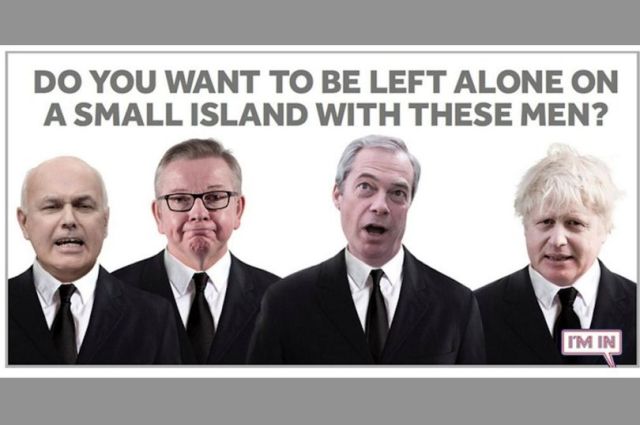
Or so I used to think; until the latest bunch of Brexiteers sprouted up. They are so like the original Goons as to make me wonder whether Spike Milligan didn’t have some miraculous powers of divination. There they are: Eccles (Nigel Farage), Bloodnok (Boris Johnson), and Bluebottle (little Michael Gove). Jacob Rees-Mogg outgoons them all. They seem to be no less ridiculous than their original versions; yet they have the fortunes of this country, and possibly the whole of Europe, in their hands. How is it that we’ve allowed ourselves to be governed by cartoon characters? I’m sure that wasn’t Spike’s, Peter Sellers’s and Harry Secombe’s original intention. They must be chortling in their graves. (‘I told you I was ill!’) Not me.

Posted in Uncategorized | Leave a comment

Bad Losers

The great national split over Brexit represents a number of things – very few of which have any essential connexion with Europe. I pointed this out even before the actual Referendum: https://bernardjporter.com/2016/06/20/this-dreadful-referendum/. People used the vote to express their dissatisfaction with all kinds of things that were going on in British politics at that time, most of which had nothing to do with the EU, of which they knew very little, and what they did know, or thought they knew, was filtered through the right-wing press and its contributors, like Boris Johnson, who put out the lies about how Brussels wanted to permit only straight bananas, and the like. If they had been more genuinely interested in Europe the people would have seen through all that. But it was at the very edge of their field of political vision; until people like Farage – who themselves would also have lain at the edge of people’s vision had it not been for the opportunity a foolish, shallow prime minister gave them to take centre stage by calling his (Cameron’s) stupid, simplistic, in-or-out, now-or-never referendum – were quite fortuitously thrown to the front.

And it’s on the basis of this narrow vote, at entirely the wrong time; on the vaguest of terms; corrupted by electoral illegalities on the ‘Leave’ side which – if it weren’t too politically sensitive – should have landed some of the Leavers in goal by now; fed by demonstrably false propaganda; with the majority crucially influenced by a generation which is largely  dead now, and so won’t have to put up with the effects of their vote; and maybe – who knows? – aided by Russia, who of course is desperate to pull the EU apart: it’s this decision that the Brexiteers feel is so sacrosanct that it would be ‘undemocratic’ to challenge it, and so are calling today’s London pro-EU demonstrators ‘bad losers’ and even ‘traitors’.

‘Bad losers’ are those who won’t accept the result of a game. This isn’t a game, it’s the most important existential decision Britain has made since 1939. Brexit can only serve the interests of rich investors and newspaper proprietors – some of whom, even Brexiteers like Jacob Rees-Mogg, are diverting their money out of Britain already. How were ‘the people’ persuaded to go along with these leeches? Ignorant racism may be part of the explanation (‘ignorant’ in the sense that Brexit may not even satisfy the racists). Or love of ‘characters’, however mad. I’ve suggested others in that June 2016 blog. If today’s march has no effect, historians are going to be left with these questions to puzzle over for decades. Well, at least that will give us something to do.

I wish I could have been on the demo, but I’m stuck in Sweden. Where, incidentally, a public meeting of ‘expats’ called by the British ambassador in Stockholm the other day gave some comfort to me personally, as one of Theresa May’s trans-nationals who deserve no consideration; and addressed as it was, clearly and honestly, by civil servants from both countries: Michael Gove’s derided ‘experts’. Thank God for them. And good luck to the brave protestors, including Brits from all over Europe as well as Britain. (As I write, the march has just started off.)

Posted in Uncategorized | Leave a comment

Brexit Spelling

Why is it that so many Brexiters can’t spell? Here’s an example (on Facebook): “…all the fault of remainers who wouldn’t get behind the boarder and put their showlda to the weel and make Brexit work.” You’d have thought that as British patriots they’d have had more respect for their national tongue. There is of course an obvious answer; but we’re not allowed to say it for fear of being labelled ‘elitist’.

Posted in Uncategorized | 1 Comment