Separated at Birth

When she beatles her brow like this …

… doesn’t she remind you of …

…. ‘Chucky’ (from the horror films)?

I’ll have more to say about the current ludicrous state of politics in Britain when – if – I recover from the Covid which has just caught up with me here. I knew I shouldn’t have left our safe Swedish island.

Posted in Uncategorized | 2 Comments

Come Back, Nanny

Returning to the UK from my period of quarantine in Sweden a few months ago, I suddenly learned that I didn’t have a doctor there any more. I’d been deleted from my surgery’s list without notice or permission, by a shadowy organisation called ‘Modality’ which had apparently taken over the practice, of which I had been a patient (or perhaps it’s now a ‘customer’) for fifty years. Eventually, and after a long tussle with the telephone robots that now rule much of our lives – ‘if you’re wanting to speak to another robot, please press 1’ – I got reinstated.

But that didn’t improve things at all. I still couldn’t get through to a proper doctor, and learned in fact that I didn’t have one: a personal one, that is, who knew me and my medical history; only a general and impersonal relationship with the practice, and an appointment with whichever doctor happened to be free, if I was very lucky, to see me (or talk over the phone) in two or three weeks’ time. Even then consultations were not expected to last more than ten minutes. That wouldn’t cover a tenth of my hypochondriacal complaints.

This is not what I had been used to. Born just a few years before the NHS came into existence, I’ve had wonderful care from a succession of GPs since then, and from NHS hospitals. (One Hull GP even insisted on driving 10 miles out to the maternity hospital to deliver our baby son personally.) I’m not sure whom or what to blame for the decline in the service recently: funding shortages obviously; Brexit possibly (depriving us of foreign doctors and nurses; and by the way, what happened to those millions that Brexit was meant to free up for the NHS?); and in Hull’s case a regional shortage of trained medical staff. The fact that we’ve all been recently deluged by advertising for private health insurance – in Hull it’s mostly from a group of hospitals called ‘Spire’, specifically promising quicker appointments with doctors – must sow the suspicion that it’s deliberate, on the part of a government that never, from its beginnings, liked the very idea of a health service that capitalists couldn’t make ‘loadsamoney’ from. (Which is why we still have some private doctors, and places like Spire.)

It also shocked me coming from Sweden: where medical care is still relatively cheap, hospitals well staffed and maintained, doctors see you quickly and for at least 20 minutes at a time, and who – most importantly – can get to know you personally, and your medical (or hypochondriacal) history. So, having failed to get an appointment in Hull, I’m now planning to return to Stockholm sooner than I intended, in order to be examined by Sarah; who as well as being an excellent doctor reminds me of how the good old NHS used to be in the olden days.

I really do miss the ‘nanny state’. Losing the NHS will be like losing the family that had always taken care of these physical things for you, so liberating you to fulfil your true potential. Ask that notorious nanny’s boy, Jacob Rees-Mogg.

Sorry for the personal. But it’s also political. And I don’t suppose my situation is unique.

(PS. I forgot to mention that my Surgery had a flood half-way through this whole process, which it’s still in the process of repairing; and which will excuse some of its failings, but not all.)

Posted in Uncategorized | 2 Comments

Growth

I watched the party Leader’s speech to the Tory Party Conference this morning. The protest was fun – Greenpeace interlopers unfurling a large yellow banner that read ‘Who voted for this?’ – which was greatly to the point; although it wasn’t a point that was picked up by the BBC commentators immediately afterwards. That point being, of course, that Truss was voted into Number 10 by only a very small minority of Tory party members, not even MPs, who didn’t represent anybody but their own reactionary and Right-wing kind. It would require another General election to legitimise her democratically; and especially when she’s abandoning many of the promises on which her party was elected (under Johnson) in 2019. She may find this is a weakness in the months to come. Looking at their faces in the hall, I’m not sure that most Tories like her much.

The speech had one basic theme, and one only: ‘Growth’ – the word repeated, I guess, about fifty times. That of course is a fundamental late-capitalist slogan, the thing that is supposed to justify the system, and may well do that to a great extent. What Truss added to it was the old idea that growth could only be achieved by unleashing individual enterprise, specifically by lowering taxes on individuals and companies – and very little more. (‘Low taxation’ was another of her repeated mantras.) That’s the theory, a simple and easily grasped one, and one that obviously appeals to anyone – like most Conservative party delegates – who have pots of money that they would like to keep. For those few among them who do care about the poor in their society, there’s always ‘trickle-down’ to ease their consciences.

But there’s little practical evidence for the ‘low tax’ theory. I presently live half my time in a country that is notorious for its high level of taxation, and therefore of social welfare expenditure, but still out-performs low-tax Britain in industrial production, inventiveness and material prosperity. (It produced a Nobel prize-winner only a couple of days ago.) Growth and high taxation are not mutually incompatible, but often the reverse. But of course only low taxes will enable the already wealthy to become obscenely rich.

Truss kept talking about an ‘Anti- Growth Coalition’ as the main obstacle to her entrepreneurial plans. That puzzled me. What is this ‘Coalition’? I’ve never heard of it before. How can I join?

Posted in Uncategorized | 1 Comment

Cruella Braverman

I’ve just come from watching our new Home Secretary Cruella  – sorry, Suella – Braverman’s speech to the Conservative Conference in Birmingham on TV this afternoon. I was pleased originally when the job was taken away from the evil Priti Patel when Truss became Leader; but I clearly shouldn’t have been. Cruella – sorry again – is obviously cut from the same cloth. The speech was appalling: dull and pedestrian for a start; but – more to the point – full of libels against Labour – do ‘many’ of them really want to ‘defund’ the police? can Labour really be held responsible for Europe’s Human Rights legislation (I wish!)? and can it be true that it’s Labour that has been distracting the police from their proper duties in order to prosecute ‘identity crimes’? – as well as of swipes against do-gooders and lawyers – in general: ‘don’t get me talking about them!’ (cheers). All this, of course, is pure anti-‘wokery’, intended as fodder for the Tory faithful in the hall, who, as I’ve noted before, have been mercilessly pruned down since Boris’s original purge of Conservative Remainers, and then by Truss’s selection of her ministers on the basis of  their ‘loyalty’ – to her – to leave only the Party’s reactionary rump in Parliament, and in the constituencies. Remember that Truss was chosen leader only by a tiny number of members, and a narrow and extremist one at that.

It led me to speculate – yet again – on why so many of the Conservative Party’s recent leaders have been (a) sons and daughters of recent immigrants, and (b) women; two groups that one might have expected to shy away from a party so firmly associated with racism and misogyny in the past. I can think of possible reasons…. but for another time, not now.

Two little postscripts. (1) I noticed that a fair number in the hall weren’t clapping or cheering at her anti-wokery, which may give some comfort and encouragement to liberals, and to the nicer Conservatives. (2) She repeatedly asserted that she wanted to make it illegal for foreigners – any foreigners – to come to Britain ‘over the Channel’. Which made me wonder how else they could come here, with the Channel standing between England and the Continent in any case. Under it? Round the back? – She meant, of course, in little boats; but that’s not what she said.

Posted in Uncategorized | 1 Comment

A Long View

So Marx was right all along. (To an extent.) Capitalism has an intrinsic and inevitable self-destructive tendency, which he thought – and hoped – would culminate in its ultimate replacement, via revolution, by a ‘dictatorship of the proletariat’, and then by socialism proper. He was wrong in thinking that this would come about quickly, starting in the most highly-developed capitalist economies in the world – Britain, Germany and the USA; certainly not Russia – and through the workers’ rising in revolution against their capitalist oppressors. He was also wrong in underestimating the resilience of capitalism, temporarily at any rate, through geographical expansion (imperialism), so easing the pressures from overproduction at home; through enlightened concessions to the proletariat (welfareism), in order to rub down capitalism’s roughest edges; and by means of sheer distraction: bread and circuses, royal displays, scapegoating outsiders, ‘culture wars’, negative propaganda directed against critics of the system, and so on. Marx couldn’t be expected to anticipate that all this could delay the inevitable collapse of the system as long as it has. But he may have been right to believe that his Götterdämmerung couldn’t be put off forever.

Could present-day events be an indication of this? I don’t only mean Kwarteng’s recent ill-judged mini budget; or the Covid pandemic; or Brexit; or the war in Ukraine; or the climate crisis – although all these appear to be pretty Götterdämmerungy; but the whole way the world seems to be moving just now. It’s beginning to look like the ‘end days’, of which the religious nutters speak. Personally, I hope not. I’ve too much to lose under our present dispensation, and don’t want to be associated with nutters. And there have been doomsayers before in our history. But it’s hard to avoid the thought. Some doomsayers have been right. (Cassandra is the prime example.) And Marx might also have been – in the very long run.

Modern British history certainly gives credence to this kind of analysis. Industrial capitalism flourished mightily in Britain in the late 18th and 19th centuries, before beginning to stumble in the so-called ‘Great Depression’ of the 1870s-on. From then onwards it was only saved from Marx’s predicted collapse by means of the ‘New’ imperialism, and then its diversion – on the back of this – into the ‘finance’ mode of capitalism which is still sustaining it today. All this kept the system going, for the rich. But not for the relatively poor, to whom the benefits of the system were demonstrably not ‘trickling down’, or not sufficiently. That required another approach, or escape route: the Keynesian or social democratic one, with popular reform financed out of taxation; together with enough legerdemain and right-wing propaganda – at their most effective during the Brexit referendum – to take the losers’ eyes off the ball. That’s kept Götterdämmerung away so far.

But the breakdown – if Marx was right; again, I hope not – was always going to come. For the past fifty years or so the capitalist wolf has been straining at the leash imposed on it by social democracy and welfareism, complaining at their negative impact on growth. Capitalism has always required ‘growth’ in order merely to continue to exist – ‘expand or die’. Over those years it showed its face at various times in different forms: Selsdon Man (remember him?), the TaxPayers’ Alliance, Margaret Thatcher, the European Research Group, always some Right-wing ideologues on the Conservative Parliamentary benches; and most recently Brexit; one of whose clear – if sometimes heavily disguised – ambitions was to ‘complete the Thatcher revolution’. This tendency was for long underestimated by the Left and by the ‘middle ground’ in British politics, and indeed was often derided as merely eccentric during that relatively consensual period when both main parties adhered to ‘Butskellism’ (after the names of two of their Chancellors) as the economic and political orthodoxy of the day. But it was growing stronger but also more problematically all the while, possibly because, as an inevitable force of nature, it couldn’t be kept down for good, until today: when not only in Britain but also in the USA and other countries of the world it appears to be reaching its apogee.

Not being an economist, let alone a Marxist one, I can’t fully understand the mechanics of this process; although as a historian I can say that at least it fits the facts, and I can see some of the human and social factors that have helped it on. They include, most recently, the manipulation of the politics of Britain – and possibly of the USA – by people and interest groups some of whom were largely unaware of the greater project they were serving; often because they simply didn’t realise that they were entrapped within the values of that project – Thatcher’s ‘TINA’, ‘there is no alternative’; or because they were only interested in serving their personal ambitions. Johnson and Truss were (are) two of these, as is the Conservative party generally, with the latter’s policy-making leadership now whittled down by stages from its previously fairly broad base – remember the ‘wets’? – to a narrow neo-liberal (or ultra-capitalist) cadre. Truss and Kwarteng – both overtly prioritizing ‘growth’ over redistribution – are the most extreme ideological ‘free market’ capitalist leaders Britain has ever had; at least since the time of Gladstone. Is this a sign of desperation? Together with the incipient quasi-fascism the present government seems to be encouraging? Historically, fascism has been another familiar response to – or feature of – capitalism in extremis.

Looking back over the history of Britain over the past two hundred years, as I’ve tried to do in a couple of my most ignored books – Britannia’s Burden (1994) and now Britain’s Contested History (2022) – it is difficult to escape the idea that this – the slow and unsteady evolution of capitalism in Britain and elsewhere, from its heroic (and largely industrial) origins, to its present financial, pretty corrupt and desperate stage – is an inevitable, ‘historically determined’ one. It may even be its final one, before everything collapses – economies, polities, our over-exploited natural resources, maybe life on earth itself – in that great Götterdämmerung to come.

I still think we can be saved, with a measure of socialism, perhaps; but it will require a great struggle against the bankers, the hedge-funders, the likes of the Daily Mail, our modern Etonians (Kwarteng is one of them); and even the fates – perhaps, if Marx was essentially right.

Incidentally, didn’t George Bernard Shaw offer a Marxist reading of The Ring? I must check.

Posted in Uncategorized | 3 Comments

Trickle Down

This is not, of course a new idea; even in Thatcher’s and Reagan’s time. Reading some of the rationales offered for it after Kwasi Kwarteng’s recent non-budget, reminded me of a lecture I gave to my university History students fifty years ago, which sought to explain how the theory was presented to the British people two hundred years ago.

By ‘people’ I mean the working classes of Britain, who were assumed to be mere children in these matters; which explains the patronizing style of the little story I’m about to retail. Some of this neo-liberal propaganda came in the form of simple tales like this, for the plebs. They were distributed among peasants and factory-workers free, tucked into the baskets of food and religious literature – the equivalent of today’s food banks – that were taken round to their hovels by charitable middle-class women. One, printed in 1817, was entitled Village Politics, Addressed to all the Mechanics, Journeymen, and Labourers, in Great Britain, by Will Chip, a Country Carpenter. In that case ‘Will Chip’ was a lie from the start; its real author was one Hannah More, a prolific and very middle-class religious propagandist, who probably wouldn’t have known one end of a chisel from the other if it had been stuck in her hand. Another was by a woman called Mrs Jane Marcet; from whose sizeable literary oeuvre this little story from 1833 comes.

It goes like this. John Hopkins, a poor labourer with a large family, starts getting bolshie ideas. Here I am, he says, half starving, while my landlord rides about in a rich carriage; isn’t it the rich who, by their extravagance, deprive us poor working people of bread? So he persuades a fairy – who happens to be nearby – to wave her magic wand and abolish all luxuries. When John gets home, however, he gets a nasty shock. Firstly, all his luxuries have disappeared: his pipe, his snuff, and so on. What is worse, and more telling, he finds all his friends and relatives thrown out of work: the nearby silk factory has had to close down, all the fine carriages have been have been turned into wagons, carts and ploughs, so carriage-makers are unemployed, and cartwrights as well, because there are now more carts than are needed. And John himself is dismissed from his job as a farm labourer, because his landlord’s farm is now too big for his new non-luxurious style of living, so he is going to let most of it go uncultivated. ‘I am now living on the produce of less than half of my estate’, he explains, ‘so why take the trouble to cultivate more, as there are no luxuries to purchase?’

In despair, John gets the fairy to change everything back to the way it was before. ‘Immediately’ – the story goes on – ‘the stately mansion rose from the lowly cottage; the heavy teams began to prance and snort… but most of all was it delightful to see the turned-off workmen running to their looms and their spindles; the young girls and old women enchanted to regain possession of their lost lace-cushions, on which they depended for a livelihood, and everything offering a prospect of wealth and happiness…’

‘John’, concludes Mrs Marcet, ‘grew wise by this lesson; and whenever anyone complained of the hardness of the times, and laid it to the score of the rich, took it upon himself to prove that the poor were gainers, not losers, by luxuries… “Why then,” he said, “after all, the rich and the poor have but one and the same interest – that is very strange! I had always thought they had been as wide apart as the east is from the west! But now I am convinced that the comforts of the poor are derived from the riches of the rich!”’ End of story.

That is surely ‘trickle down’ in essence. It goes way back, as a means of justifying inequality, in the interests – of course – of the rich. It’s interesting to see it returning so blatantly today, under Truss and Kwarteng, and after it has been so thoroughly discredited by most economists. When I delivered that lecture in 1969, we – I and my students – all assumed it was just history, inconceivable in that more enlightened, social democratic age. But you never can tell, in the present deeply reactionary times.

Posted in Uncategorized | 4 Comments

The Swedish Election

I timed my return to the UK to be able to vote in my first national Swedish election since becoming a citizen. I did that yesterday. As yet we can’t be certain of the result, but it looks as though the red-green alliance will be pipped to the post by the blue-brown one (Conservative through to extreme Right), which might have the effect of negating my whole reason (apart from love) for embracing Swedish nationality. The Sweden Democrats (SD) will be the largest party on that side of the fence, although they won’t want to claim the Prime Ministership – too much responsibility, as I understand. But they are bound to profoundly influence the policies of any new right-of-centre government, in a racist direction. (The party’s origins were Fascist.) So it’s gloom all around for those of us on the Swedish Left.

Well, I thought, at least I’m still a ‘dual’ Brit, and so can choose to get away from a racist Sweden if I want. That option isn’t open to poor Kajsa. – But wait. Frying pans and fires come to mind…

Not all the votes here have been counted. There still remain the postal and ‘overseas’ ones. Kajsa thinks they’re more likely to be conservative – whatever that means in a Swedish context. (If they’re literally ‘conservative’ they should be wanting to ‘conserve’ Sweden’s Social Democratic tradition, surely.) As well as that, the Centre-Right coalition might fall apart over the issue of whether the SDs should be given any government posts, which the Liberal faction is likely to resist. We won’t know any of this until the middle of the week. By which time I’ll be back in King Charles’s konungarike, and just as unhappy, under statsminister Truss.

Now off to Arlanda to catch my plane…   

Posted in Uncategorized | 4 Comments

The Queen and I

‘Britain is the great country it is today because of her’ – Liz Truss. No it isn’t: neither ‘great’ – however you like to define that – nor ‘because of her’. (She’s never had that kind of influence.)

Why does Truss feel she needs to spout such tripe? Is it to make Brits feel better about themselves and their corrupt and benighted homeland? Is it all part of a strategy to help national recovery through ‘positive thinking’? – Boris was full of this, of course, and of virtually nothing else in his brief (but still too long) tenure at No.10. The dangers in it are obvious: firstly complacency, neglecting what needs to be done in a practical way to improve things; secondly attracting ridicule abroad, quite justifiably (you should hear some of my Swedish friends); and thirdly – and most absurdly and dangerously – condemning doubters as ‘traitors’, for ‘under-selling’ Britain in the world. I can almost hear the ‘patriotic’ Tories assembling their firing squads.

I rather liked Queenie. She was stable and sensible, and quite like one’s ideal Mum. I liked her more when it was rumoured that she got on well with Harold Wilson and black Commonwealth leaders, and hated Thatcher as much as I did. I especially admired her restraint, never revealing – except through rumours – her opinions on anything controversial, although she must have had them. (If his previous history is anything to go by, our new King Charles won’t be nearly so disciplined.) She bore the most insufferable of her duties – like being polite to some dreadful world leaders – stoically, which was all that was demanded of her. Of course she had the advantage of living in enormous luxury, with half a dozen castles to choose from, a royal yacht at one time, a whole stable of horses, lots of cuddly doggies, and an army of retainers to administer to her every whim; but none of that would have compensated for having to talk with Thatcher every week or so, and to be nice to Donald Trump. I reckon that if you have to have a ‘constitutional monarch’ in this day and age, Elizabeth II was a pretty good model for it. She’s also a fair argument against having an elected Head of State; which in Britain’s case might land you with a TV personality as your President. Imagine: someone like Boris Johnson, for life.

Sweden’s royal family comes close to that model, with the added advantage – an important one – of not having so many hangers-on. That would be my ideal for Britain: a drastically scaled-down Royal Family, living in just one little castle, with a sommarhus in Scotland – well away from the English – for a holiday home. Our late Queen might have liked that better.

I met her twice, both embarrassingly. On the first occasion she was visiting my school to mark its 400th anniversary (actually that ‘400’ was a bit of a cheat: there had been a long interregnum in the 19th century), and I was in a CCF ‘Guard of Honour’, lining her route as she drove away. (I tried to get out of it by being as scruffy as I could – I hated the khaki uniform – but was tidied up and placed in line.) I don’t think she spoke to me, mercifully. Imagine my horror, however, when I saw a woman break through the cordon to the royal car in order to curtsy to her; and realised it was my royalist mother. Of course I tried to keep it from my friends. But it soon got out, to my schoolboy shame thereafter.

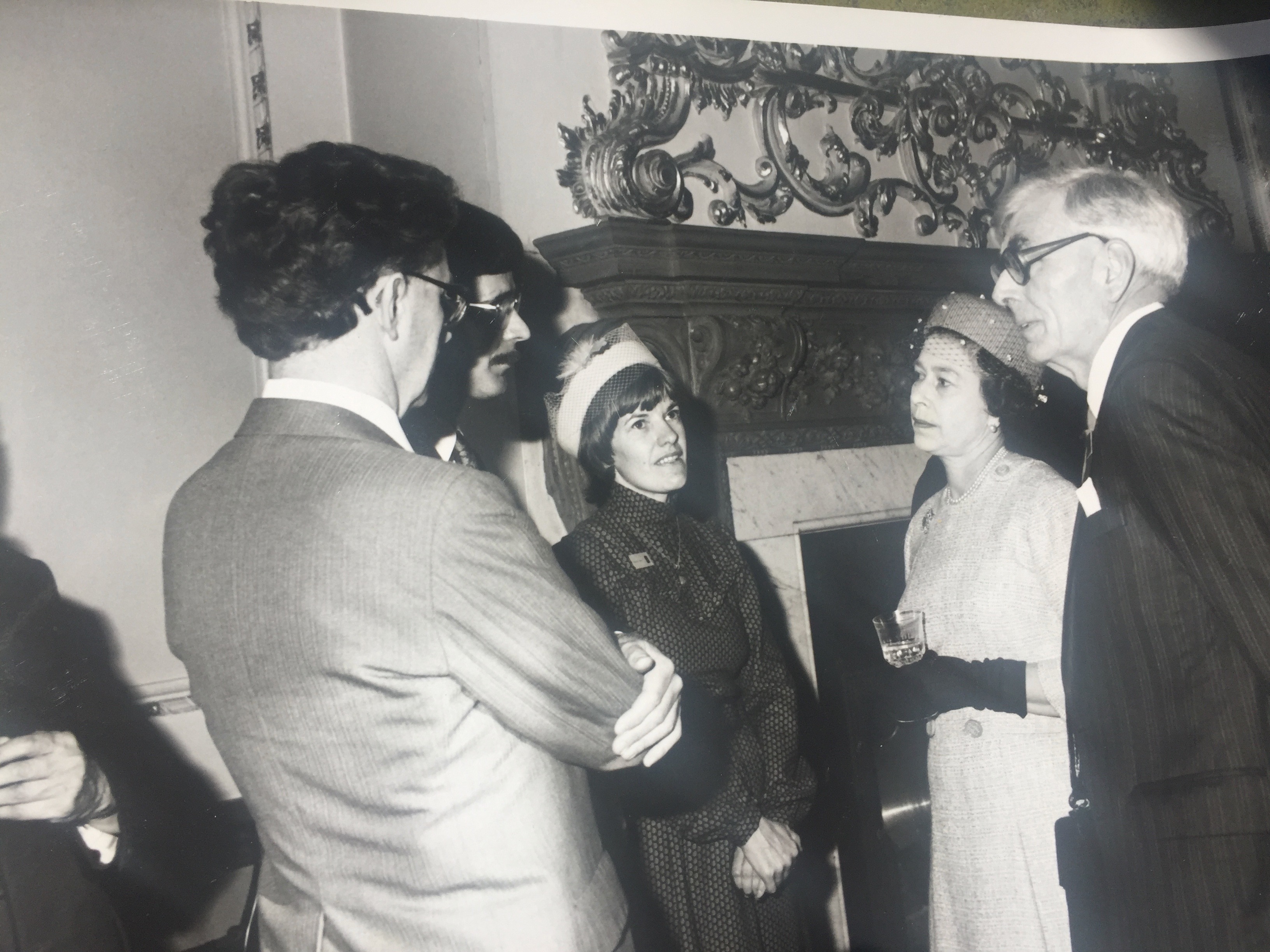
On the second occasion, I actually talked with her. It was at a big shindig in – I think – Stationer’s Hall, to celebrate the 75th anniversary of the (British) Historical Association, which she was ‘patron’ of. I’d given a public lecture in connexion with that. (All the lectures were published soon afterwards, in a book edited by Donald Read.) She reached my little group later than scheduled, by which time I’d quaffed nine or ten glasses of dry sherry. I didn’t think it would matter, because all royals are inbred and stupid, aren’t they? So whatever I said she wouldn’t take in. She asked me a question – I think it was about Anglo-American relations – and I answered it in a simple form I thought she would understand. So I wasn’t prepared for her very intelligent follow-up question; which put me into full – semi-drunken – lecturer mode. I thought at the time that it went down well; but the photos taken of the event showed her looking as bored as sin. But it taught me a lesson. Don’t underestimate Queenie, just because she’s a royal. That was arrogant of me.

So, that’s my personal reminiscence, on the occasion of what I’m led to believe is a sad death (but she was 96), and the end of an era: except that in modern times ‘eras’ can’t be marked by monarchs’ lives. If they could, then Elizabeth II’s will probably be seen as an era of national decline, and not at all as Liz Truss presents it. (Isn’t it interesting, incidentally, that Truss was the last politician the Queen met, just a few hours before being taken ill?)

Posted in Uncategorized | 4 Comments

The Civilizing Mission

I suppose it could be regarded as proof of the success of the ‘civilizing mission’ aspect of British imperialism that so many of Britain’s ex-subjects and their progeny have become so civilised as to have risen, in the space of just one generation, to the very top of Britain’s ruling hierarchy, without their ‘race’ standing in their way. Mind you, they had to leave their ex-colonies to do it; but that too could be counted to the credit of Britain’s liberal – and Empire-inspired – immigration laws for ‘Commonwealth’ citizens, before the more restrictive Immigrant Acts of 1962 and 1968 came along. ‘Civis Britannicus sum’ (Palmerston) was one of liberal imperialism’s proudest boasts, and what enabled so many British West Indians and others to make their homes in the ‘mother country’, contributing vitally to its economy and society; from Empire Windrush on.

My correspondent Tony (above: https://bernardjporter.com/2022/09/07/diminishing-returns-2/#comments) draws attention to the hard-Right political orientation of those of them who feature in Truss’s cabinet, as they did in Johnson’s; which might seem surprising to those who would presume that ex-colonial subjects (albeit at one remove) wouldn’t want to be associated with their former oppressors’ favourite party. (Kwasi Kwarteng’s book, my review of which I can’t find just now, is pretty critical of old Tory imperialism.) There are reasons for this. One may be a need for ‘outsiders’ to appear as ‘British’ as possible, in order to be accepted; and how much more British can you get than to be a Right-wing Tory? Female politicians might feel that something similar is required in order to be accepted by Tory male chauvinists; hence Thatcher’s very ballsy demeanour and policies. (And Priti Patel’s, of course.) Another factor might be that to be an immigrant – to flee from your country, in the face of great obstacles – you need to be enterprising and ‘aspiring’, which naturally inclines you (and your children) towards the most entrepreneurial and aspirational political Party in the country, which is generally taken to be the Tories. It also helps to be rich, which has almost never been subject to a colour bar, and which most of the leading ‘ethnic minority’ Conservative MPs are. It’s this that has smoothed their path to the top. Not many poor Indians or Africans have been able to make the same journey. They’re generally to be found in the Labour Party, if anywhere in politics.

And of course there are plenty of them on that side of the political divide. It is certainly not true to say that ethnic minorities, as a whole, are more likely to be Tory than Labour. Probably their political affiliations pretty accurately reflect those of the broader communities they’re part of; and especially their economic statuses (stati?). The Tories have Rishi Sunak; Labour has David Lammy. It’s what you would expect, if all of them were as white as snow.

Posted in Uncategorized | 2 Comments

Diminishing Returns

It’s good to see the backs of the evilest member of the government, Home Secretary Priti Patel, and of the most ridiculous, Culture(!) Secretary Nadine Dorries. Also I suppose we should welcome the diverse gender and ethnic make-up of Truss’s new cabinet, with none of the top four members of it – as has been widely noted – being a ‘white male’. On the other hand one of those four, Kwasi Kwarteng, the new Chancellor of the Exchequer, was educated at Eton and Cambridge, which will have washed some of the brownness out of him (incidentally, I reviewed a book of his, which wasn’t at all bad); and in any case Tories have never been universally racist, at least at the top of the party – they once had a Jewish prime minister, after all – and usually accepted ‘civilized’ natives, which is clearly how Kwasi, Braverman and Cleverly can be seen. ‘Class’ often trumped ‘race’ in the upper-class imperialists’ mindset. In other words, they were more often ‘classist’ than ‘racist’. (See David Cannadine’s Ornamentalism: How the British Saw Their Empire, 2001.) So we shouldn’t be too surprised by Truss’s choice of her senior lieutenants, or particularly reassured.

For what seems to characterise this government more than its racial or its class biases is its members’ common ideological identity, which is to the Right of the presently-understood political spectrum, which ranges from State-interventionist on the Left to ‘neo-liberalism’ (or anarcho-capitalism) at the other extreme. Truss’s replies to her first Prime Minister’s questions today made this crystal clear: that she was against taxing the rich in order to help the poor in the present economic crisis, for example, because that would hinder the investment and enterprise which alone would enable the economy to grow: with, she implied, its benefits ‘trickling down’ more beneficially than ‘State hand-outs’ could ever effect. That of course has been a main Tory mantra for decades now; temporarily abandoned when Keynesianism was all the rage, but then revived under Thatcher, and still going strong – or even stronger – on the Right.

But not, surely, among ‘ordinary’ (and poorer) people. It can’t be a democratic choice for them, but is being imposed from above by a small group of free market ideologues which has seized control of the Conservative party over the years – albeit more gradually and incrementally than the word ‘seize’ may imply. The first stage was Thatcher’s war against the ‘wets’ – the social-Conservatives – in her party; followed some years later by Brexit, which was essentially a victory for the ‘dries’, leading to an exodus of usually social-Conservative Remainers under Johnson; and now by Truss’s excluding from her new cabinet – we think: the process hasn’t been completed yet – of almost any MP who didn’t back her for the premiership, and so by implication any who didn’t share her (and the Tory membership’s) libertarian views. All of which might help explain the poor personal quality of the last couple of cabinets, with prime ministers having to recruit their members from an ever decreasing pool of talent.

Race and gender are important to Conservatives, and class even more so. But it’s economic ideology that trumps them all.

Posted in Uncategorized | 2 Comments