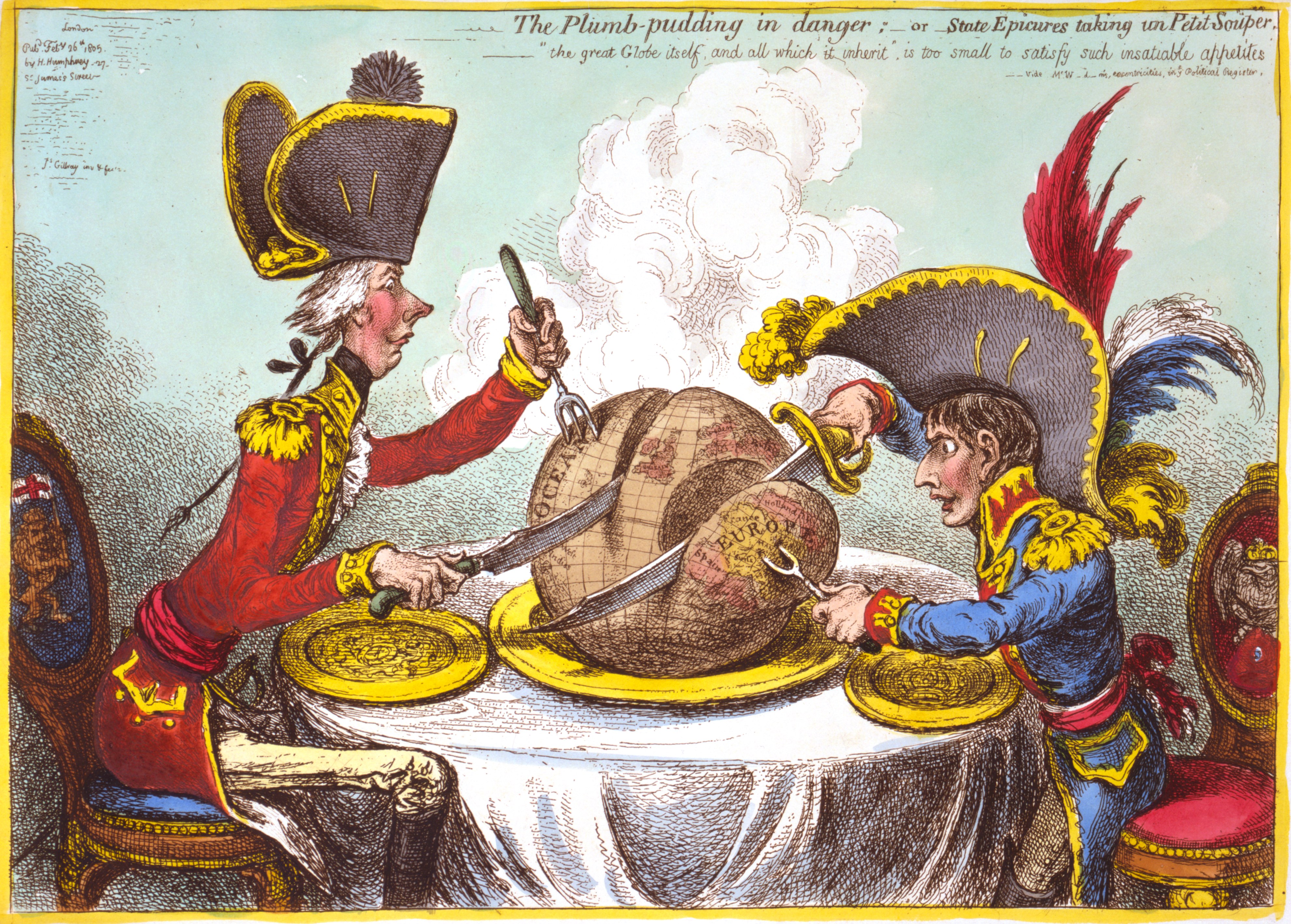
Manifest Destiny

I’m a little surprised at Trump’s recently expressed expansionist ambitions – Greenland, Canada, Panama, his Gaza seafront condos – as I had always had him marked down as an isolationist, following in that well-trodden American tradition. But the US has always – from its very birth – had a solid imperialist tradition too; which of course I’m aware of, to the extent of having written half a book about it a few years ago. That was in order to demolish the common American assumption that – as Donald Rumsfeld memorably put it in 2006 – ‘we don’t do empire’; which I imagine was inferred from the fact that the USA was originally born of an anti-imperial rebellion, and so must have been innocent in this regard ever since. In fact Rumsfeld was egregiously wrong about this, in ways I explain in that book (Empire and Superempire, Yale UP, 2006), and in ways that most modern American historians will confirm. (I wasn’t by any means the first to come to that conclusion.)

So, Trump’s expansionist ambitions should come as no surprise. Indeed, some of them are revivals of older colonial projects, such as his Panama scheme, which would see the US return to a colony it only abandoned (sort of) in the 1980s; and Canada, which it tried – but failed – to annex in 1812. Before that there was the seizure of much of Mexico and of all of the previously French territory in the South to look back on, as well as Hawaii, Alaska, and the ‘Wild West’ of the north American continent – stolen of course from the native Americans. Greenland might be a new imperial target today, as the ‘purchase’ of Gaza as an ethnically-cleansed piece of luxury real estate certainly is. But territorial expansion has always been an essential part of the greater American project; sometimes – at the turn of the 20th century in particular – called imperialism, but even when it wasn’t.

The reason why most Americans were reluctant to recognise this as ‘imperialism’ – apart from the word’s association with mad King George III – is that America’s ‘colonies’ were not, and presumably won’t be under Trump, ruled in the traditional European way, with ‘viceroys’ in silly plumed hats and district commissioners in khaki shorts and pith helmets; but more indirectly, through local and American commercial collaborators doing the USA’s will. (This was a favourite British method too, but supplemented here by the plumed hats where necessary.) So American ‘informal’ colonies didn’t carry the visible signifiers that were generally associated with ‘imperialism’; thus allowing the USA to cling to its anti-imperial reputation for all those years.

One thing America shared with other imperial powers, however, was a certain arrogance: a tremendous self-belief that she represented the summit of civilisation, just as the ancient Romans, British imperialists, the Spanish conquistadores, German Nazis and Russian international communists had, in every case justifying their control or influence over other peoples. We can see this in Trump, of course; it’s one of the things that in his view will render Greenlanders, Canadians and Gazans eager to welcome their new status as the 51st to the 53rd States of America eventually. That of course would also draw some of the alleged ‘imperial’ sting. The US’s superiority is supposed to lie in its ‘freedom’, defined commercially, and its prosperity; which are the prizes Trump is offering to Canada, Greenland and Gaza, but entirely oblivious of the possibility that these goodies might not be what the populations of these places really want. America holds all the ‘cards’, as he told Zelenskij last week; other places (‘shithole countries’, as he once characterised some of them) must envy her. There’s the mind of the property-developer capitalist talking. The ‘Art of the Deal’ is as simple and materialistic as that.

It’s this that could be said to bring the two great traditions of American foreign policy together. Trump is an isolationist first and foremost: ‘America First’, and all that. But his other big slogan – ‘Make America Great Again’ – implies competition with other countries; colonising many of them in effect, in America’s commercial interests, but not understanding them at all. His is a sort ofisolationist imperialismwhich has the advantage of being cheap – indeed profitable – but with none of the advantages that the older-fashioned European plumed-hatted sort of imperialism had. When you run ‘alien’ colonies more directly, and out of a sense of ‘service’, not just for profit, you get to know about their alien ways, and often to empathise with them. (I realise that this is an unfashionable idea; but you’ll find it elaborated in my ‘British Empire’ books. Two great novels, EM Forster’s Passage to India and Graham Greene’s The Quiet American, also bear on it.) Hands-off rule doesn’t have this advantage.

Trump’s approach also seems to me to bear out Lenin’s famous characterisation of ‘imperialism’ as being ‘the last stage of capitalism’. What could be more last-stage capitalist than a property developer and a fabulously rich techno-entrepreneur looking around for more real estate to annex?

Posted in Uncategorized | Leave a comment

‘Christianity’ Weaponised

I was brought up a Christian, in a very liberal (English Methodist) church. I was happy there, and only left when it was demanded of me that I have ‘faith’: ‘Faith, Hope and Charity’, as it says in the Good Book (I Cor 13. 1-13). OK, ‘Charity’: that goes without saying. ‘Hope’: well, if you’re lucky. But ‘Faith’ – that is, uncritical faith, in the existence of a God, for example, or the Resurrection – I felt went against my vocation as a budding scholar. So I dumped it. What I’ve retained from my Christian upbringing is the moral teaching, as I understand it, of most of the New Testament, especially the four Gospels (but not 1 Corinthians); and which is found, of course, in other religions too.

Which is why I’m still unwilling to identify as a Christian, when that might associate me with others, like Jacob Rees-Mogg and people on the American ‘Christian’ Right, whose views directly contradict the true kernel of Jesus’s teaching . Again, ‘as I understand it’. (I’m no theologian; but then Jesus wasn’t preaching to them.)

Many others have made the same point about false, tribalised and weaponised versions of ‘Christianity’. Here’s one recent example: https://medium.com/@garylellis/when-christianity-lost-christ-e5d388da5d58. – Monty Python’s Life of Brian is pretty sound on this, too:

Brian: Look, you’ve got it all wrong! You don’t need to follow me. You don’t need to follow anybody! You’ve got to think for yourselves!  You’re all individuals!
Crowd:  Yes! We’re all individuals!
Brian: You’re all different!
Crowd: Yes, we are all different!
Man in crowd: I’m not…
Crowd: Shh
h….

Brilliant!

Posted in Uncategorized | 2 Comments

Typical Trump

I’ve just watched a recording of Trump’s address to Congress yesterday. It was billed as 90 minutes long; but about half of that was taken up with clapping, whistles and screaming from the Republican side of the House. (The House of Commons is positively decorous by comparison.) The speech itself was just like his public campaigning speeches: repetitive, boasting, rabble-rousing, full of lies, revengeful, with no serious adumbration of policies, apart from ‘making America great’ (and all the rest) again, and anti-‘woke’ and anti-Biden rants. In other words, it was quintessential Trump. I suppose you can say it was a remarkable performance, especially by a 78 year-old; but that’s all it was – a strong performance. He’s obviously fitter than he looks, and than he ought to be, if what they say about his diet is true. (Burgers and French fries, washed down with Cokes.)

If only we – in Britain – could disengage from Trump’s America! Most of us Europeans are frankly embarrassed by many of the views being expressed by the top people there, such as JD Vance’s latest barb about Britain’s military capability, and his earlier ones about ‘no-go’ areas in London, and people being arrested for praying. And was it he or Trump, or perhaps Musk, who claimed that in a few years Britain would be the next Islamic country with nuclear bombs?

The reaction in the UK to Vance’s reference to Britain as ‘some random country that hasn’t fought a war in 30 or 40 years’, was mainly that it was ‘disrespectful’ to our troops; who of course have fought wars over the past forty years, usually in support of the USA, and with substantial casualties. That’s obviously important to you if you regard ‘respect’ highly, as Trump clearly does when he describes Zelensky as having ‘disrespected’ the Oval Office by not wearing a shirt and tie to his meeting with Trump the other day. My main criticism of him and his rich acolytes, however, is of their ignorance, which I regard as far more dangerous – to the world – than their lack of respect; and which no amount of ‘respect’ can compensate for. It’s easy to see whence their falsehoods derive: from Fox News, the right-wing social media, and the last despot Trump has shaken hands with. They clearly don’t read widely, and only take in arguments or supposed ‘facts’ that confirm their prejudices. And that’s what fuels their stated views, and now Trump’s actions; meaning that US policy is now dictated by ‘social media’, in a way I don’t think it ever was before.

And of course Trump has more power than most other heads of state have today, apart from acknowledged dictators; revealed by the way he is wielding ‘executive’ powers that most of us never imagined American presidents possessed. What has become of the ‘separation of powers’ in the USA? Wasn’t that intended to prevent this kind of thing?  Shouldn’t all Trump’s draconian measures have been passed by Congress first? – I did two years of US history at university, so I’m not completely ignorant.  But those studies never prepared me for this.

Posted in Uncategorized | Leave a comment

Trump and Zelensky

Trump’s past commercial ties with Russia are pretty widely known – Google ‘Trump’s relationship with Russia’ if you’re not currently aware of them. He has clearly never been as brilliant a ‘deal maker’ as he makes himself out to be, and on at least one occasion had to be rescued from imminent bankruptcy (over a collapsed casino) by Putin-linked Russian banks. Those Google references document several other ways in which Trump might feel financially beholden to Russia; as well as suggesting that Putin also possesses a ‘compromising’ tape of him with a couple of prostitutes in a Moscow hotel. (I won’t go into the unsavoury details.) All of which has even been taken as evidence that he has been a secret Russian agent, no less, since the 1980s; in connection with which however I remember elements in MI5 suspecting Prime Minister Harold Wilson of being a Soviet spy, on the strength of his official visits to the Eastern bloc as President of the Board of Trade in the 1950s. So I’m reluctant to go along with the ‘kompromat’ stories that are supposed to explain Trump’s partiality to Russia fifty years on. That’s the stuff of spy novels. (Though it just might be true!)

But in any case that partiality can be explained without venturing into John Le Carré territory. Firstly, Trump has never shown any sign of being a ‘democrat’, in any sense, and so probably thinks nothing of the ideological divide that is supposed to separate the USA from Russia – or even from the old USSR. For him, ‘democracy’ is simply a game to be played, with few holds barred, and the ‘winning’ or ‘losing’ of it being its only point, irrespective of any principles involved. If he wins, or can be seen as having won, it will accrue prestige to him: which is the second major desideratum in his mind. A third of course is money, either for the USA or for Trump himself, which is why it was that ownership of Ukraine’s precious metals featured so early in his ‘negotiations’ with Russia. A fourth motive – connected with that – is his crude businessman’s view of the world, where everything is seen in terms of ‘deals’, suggesting to him that concessions to Russia constitute the best bargain a deal-maker like him can hope for, in view of the fact that Ukraine, as he brutally told its President, ‘holds none of the cards’. Further: it’s probably true that he does genuinely admire authoritarian dictators: the pre-eminent ‘winners’ in his über-competitive scheme of things; and is working – with his current domestic ‘executive’ measures – to become one himself. And lastly, there’s his crude nationalistic – even proto-fascist – ‘America First’ agenda. That, plus capitalism, and narcissism, probably sum up the man.

By his side, of course, he has his venomous vice-president JD Vance; who has his own reasons for loathing the Western liberal (or ‘wokeish’) values that used to be common to both America and Europe but no longer are, and which chime in with Putin’s deeply reactionary ones. Vance’s recent speeches, largely spun out of social media lies, exemplify this: with the notorious ‘culture wars’ now injected into international diplomacy for (I think) the first time.

All this said, we perhaps shouldn’t dismiss entirely the possibility that Russia might have some right on its side, on the question of Ukraine’s historical and legal status vis-à-vis Russia, and the ‘provocations’ the latter sees as having come from NATO and the EU. At the very least they can help us understand Russia’s nervousness. Foreign relations can rarely be seen in simple black and white terms, especially where ethnically and linguistically mixed populations are involved. Reaching back into history, the Sudeten Germans had a case of sorts in the 1930s, and the Schleswig-Holstein Danes in the 1860s. The same could be said today of Russian-speakers in Dombas and Crimea. This might be a better reason for taking Putin’s side on this question, and that of his new-found buddy Trump. That’s something that future historians are going to have to argue over, when they know how things turn out.

This is no reason for not defending Ukraine’s resistance to Russian aggression, of course. But a historian of conflict needs to see both sides.

Posted in Uncategorized | 3 Comments

The Evil Man Theory

Everyone who has followed this blog will know that I’m not a great one for attributing big events to individuals: what used to be called the ‘great man theory of history’ (https://en.wikipedia.org/wiki/Great_man_theory). That ‘theory’ of course is more favoured by ordinary folk – it’s simpler and makes for easier story-telling – than it is by us professional historians, who are happier with complexity, and are generally more sophisticated in our analyses.

But what can we say in the age of Donald Trump; who in such a short time, and in defiance of the intentions of the American Constitution, as well as of most people’s understanding of ‘democracy’, has accrued so much power into his own individual hands? (‘Great men’, of course, can be evil too.) Some of that power – his ‘executive orders’ – may be challenged in the courts, and be whittled away at the edges. And those of us who remain reluctant to believe in the ‘great man’ idea still need to look at the wider historical factors that put this particular one into power.

For my part, the inexorable rise of unrestrained capitalism must be one of those underlying factors, personified today by the property developer tycoon with his techno-billionaire courtiers, and – on what used to be the ‘other side’ – Putin and the monied villains surrounding him. It used to be ideology that divided the ‘West’ from the ‘East’; now it’s a single ideology that is bringing them together. (That’s irrespective of whether or not Trump was ‘compromised’ in the 1980s by the FSB.) Putin is a dictator; Trump a wannabe one. They’re both bullies. Vide Trump’s openly-expressed support for Putin, and his grotesque public onslaught on Zelenskyy the other day.

But all credit to Keir Starmer for hugging Zelenskyy afterwards, ostentatiously but quite un-Britishly; and for showing leadership in spearheading Britain’s response to Trump (and the serpent JD Vance) the following day.

Posted in Uncategorized | Leave a comment

Satire?

You’ll have seen this – everyone must have done by now. It even featured on tonight’s Swedish TV News. They called it ‘bisarra’.

https://truthsocial.com/@realDonaldTrump/posts/114068387897265338

We don’t yet know its genesis. It appeared on Trump’s website. Did he order it? Or approve it? I think we need to know. It gives a disturbing glimpse into his narrow property-tycoon’s mind.

Bearded belly-dancers? A giant golden statue of the Donald? Elon stuffing food into his mouth? Souvenirs of a little Trump sitting on a golden toilet? A crotch-eyed view of him and Netanyahu lying half-naked on a beach? – ‘Bizarre’ doesn’t cover it.

If he did authorise this, the very least it shows is that he has no sense of humour, or awareness of satire; a fatal flaw in any human being. (Thatcher had it too.)

Posted in Uncategorized | 1 Comment

Storstark

Subscribe to continue reading

Subscribe to get access to the rest of this post and other subscriber-only content.

Posted in Uncategorized | Comments Off on Storstark

Labour and War

Starmer’s position on Ukraine – that he would support sending British troops there to keep the peace (whatever that means) – is a canny one from a domestic political point of view. For many years Labour lost votes for being seen to be pacifistic and hostile to the armed forces; which is quite mistaken historically, but an impression that seemed to be confirmed by the fact that the nation’s leader in World War II was the (nouveau) Conservative Winston Churchill.

In fact the true military men in his war Cabinet were often socialists, including the Labour leader Clement Attlee, who in World War I had fought at Gallipoli and worked his way up through the ranks to become a Major. By contrast Churchill saw very little action, and was given his high rank (Lieutenant Colonel) only because he was a toff. (See my Britain Before Brexit, 2021, chapter 8.) During World War II it was generally the working classes who were more solid in favour of that defensive war – as opposed to aggressive, imperial ones (see ibid. chapter 9) – with their MPs crucial to the removal of Neville Chamberlain, and his replacement by the warlike Churchill, whose own Conservative party was more equivocal on the issue, to put it mildly. Many of them (together, notoriously, with the Daily Mail) flirted with Nazism. So don’t be misled into thinking that Conservatives are always more patriotic, in this kind of situation, and the Left the ‘traitors’, or wimps. Sir Keir represents a strong Labour tradition here.

Posted in Uncategorized | 2 Comments

Trump and Ukraine

Trump’s problem – or, rather, our problem with Trump – is that he can’t think analytically. Or at all. He simply accepts what he’s told by his ideological allies, on Fox TV and social media, or by the last world leader he has spoken with. The most recent of these was Vladimir Putin, who sent him away with the ideas he then blurted out about Zelenskyi’s being a ‘dictator’, and responsible for starting the war with Russia. All of which must of course disqualify him from acting as an ‘honest broker’ – or a genuine ‘peace-maker’ – between the two sides.

If he had given any proper thought to the Ukrainian situation he would have realised – as all professional diplomats must – that the issue is far more complex than he assumes, and not to be settled by a simple business deal, or division of assets: Ukrainian territory to Russia, Ukrainian precious metals to the USA; and without Ukraine’s participation in the talks. Elsewhere, Trump’s suggested settlement of the Gaza ‘problem’, by expelling the Palestinians and replacing their blighted homes with Riviera-like hotels for the rich, comes from the same playbook. Which is entitled, of course, The Art of the Deal.

Indeed, The Art of the Deal could serve in much the same way as Mein Kampf did – or should have done – by revealing the minds of the putative dictators who authored them. (Or in Trump’s case presumably had ghost-written for him.) Trump sees all negotiations in terms of ‘winning’ (or losing) ‘deals’; with the narcissistic element of his personality wanting this to reflect positively and personally on him. (Is it true that he’s hankering after a Nobel Peace Prize?) This is another reason why he seems to have taken Putin’s side over this crisis: because it offers the easiest ‘win’, and profit, for him.

Whether this explains or even illuminates what is going on at the Russia-Ukraine border just now is doubtful. If Trump could think more analytically, or simply think, he might realise that life at any level, let alone this elevated international one, involves more than just ‘dealing’ in this simplistic way, but has broader human, emotional and historical components that also require to be taken into account.  A knowledge of Trump’s business brain is useful to understand how he approaches these issues, but not the issues themselves.

At best it may exemplify what I’ve hinted at once or twice in this blog: my economic-deterministic (Marxist?) view of our modern history’s being governed by the development of global capitalism; with the overt domination now of a couple of late-stage capitalists (Trump and Musk), and of their methods – businesspeople have always been impatient of social democracy – perfectly illustrating this.

Maybe Trump’s ‘deals’ over Ukraine and Gaza will succeed. I almost hope not.

Posted in Uncategorized | 2 Comments

Global Realignment

Vice-President JD Vance’s speech on Saturday to the Munich Security Conference (https://www.youtube.com/watch?v=pCOsgfINdKg) may have marked a crucial turning-point in recent world history. This is not only for its signalling of the USA’s disengagement from the defence of Europe after eighty years, but because of the rationale Vance gave for that decision. This went way beyond the best reason he cited – that Europe should look to its own defence more, and not be so dependent on American generosity – which may have a great deal to be said for it (I broadly agree); and which it now looks as though Britain and other European nations may be taking on board. (See https://www.bbc.com/news/articles/c4gxgxl3grgo.)

But the speech was also important because of the deeper reason Vance gave for the split between them; which was that the USA and Europe no longer shared the same ‘values’ that had once united them. To illustrate this he focussed mainly on the issue of ‘free speech’, which he claimed was more under threat in Europe than it was in his own country; citing a number of alleged examples (including in Britain and here in Sweden) which – in my opinion – were at the very least distorted or exaggerated, and appeared to have been garnered from some of the furthest reaches of the Right-wing social media. Apparently these pose more of a threat to Europe than the military danger from those notable champions of free speech, Russia and China. This was quite explicit in what Vance said: ‘The threat that I worry most about vis-à-vis Europe is not Russia, not China, it’s not any other external actor. What I worry about is the threat from within: the retreat of Europe from some of its most fundamental values.’ Here we have the ‘culture wars’ – which I used to dismiss as mere undergraduate frippery – fully armed and on the prowl.

This may exemplify a seismic shift in global polarities. For over fifty years we’ve been used to the great political divide in the world being the one between liberal (or capitalist) countries on the one hand, and communist ones on the other. In the former camp you had most of the western European powers, plus the United States of America, and various other lesser actors. On the opposing side there were Soviet Russia and its eastern European and mid-Asian dependencies; together with China, espousing a different version of communism; and other quasi-socialist countries scattered around. But then came the fall of Soviet communism, leaving that camp broken, and the leadership of Russia in particular seeking to re-establish its former hegemony without the ideological cements that had bound it to its former ‘satellites’, in both Tsarist and Soviet times.

It was then that the great change took place, with leading players swapping teams, and fighting on different sides. The obvious example is the new warmth that appears to be growing between those former political enemies Trump and Putin, with Trump openly expressing his admiration for Putin, and taking on some of the latter’s authoritarian characteristics himself. Vance’s speech can be seen as a sign of America’s distancing itself from its old European allies not only militarily, but also ideologically. This is why it was – apparently (the reference here is from Musk’s ‘X’) – so enthusiastically welcomed by the Kremlin (https://x.com/jcbehrends/status/1890721064390447356), which clearly shares many of Trump’s reactionary prejudices. And it opened up the possibility of a new global division, to replace the old communist-democratic ‘Cold War’ one, between – what to call them? Dictatorship and democracy? Authoritarianism and liberalism? Reaction and Progress? ‘Populism’ and ‘Woke’? – with the two combatant armies mustered differently, and Putin and Trump – a real dictator and the wannabe one – now on the same side.

There can be little doubt just now that the Right is winning, both nationally and globally, and highly dangerously. I can understand its appeal; I may blog about this later. But I’m beginning to despair of my world.

Posted in Uncategorized | 3 Comments